

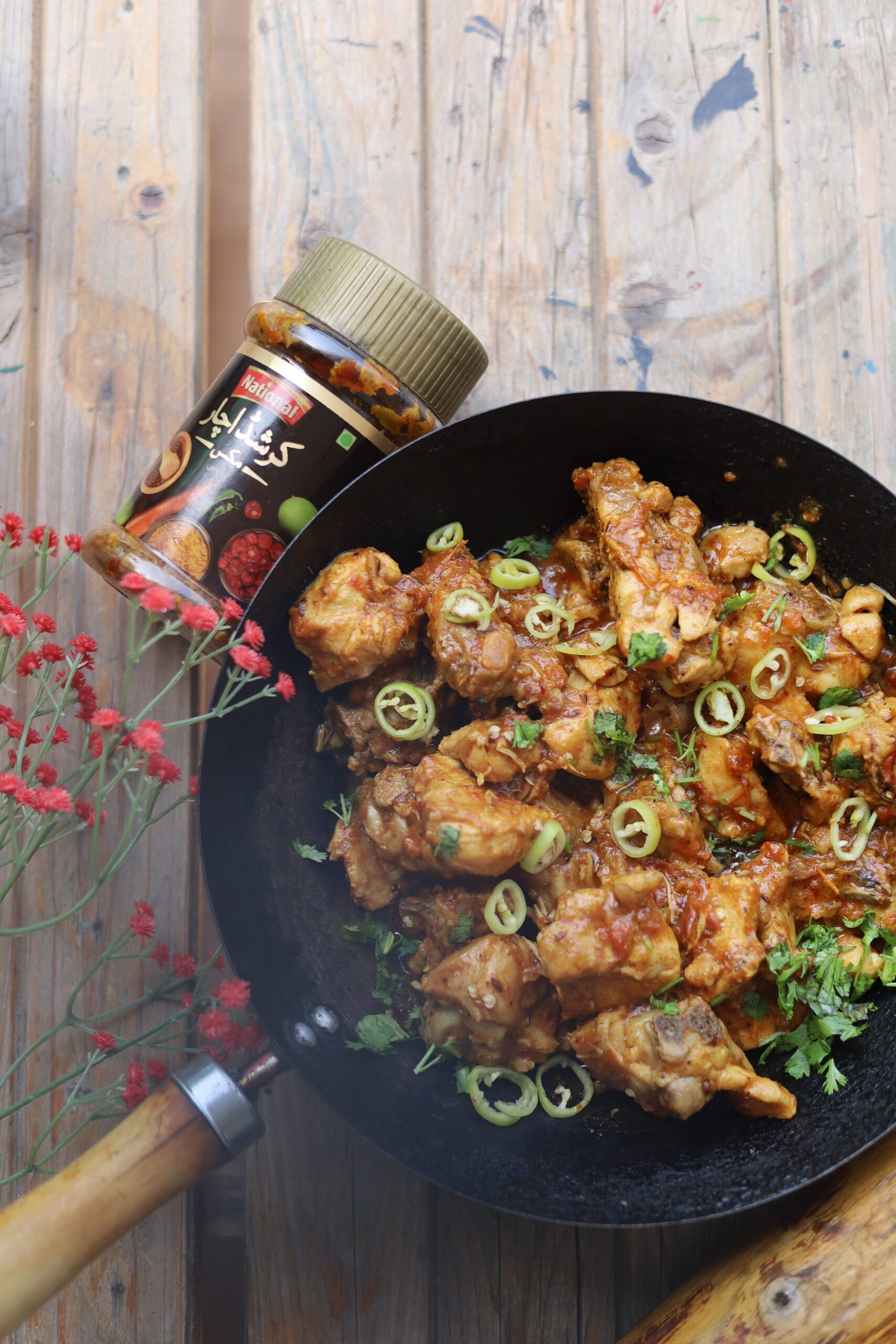
Authentic Pakistani Style
Chicken Karahi is one of the most loved dishes in Pakistani and South Asian cuisine — a rich, spicy, tomato-based chicken curry cooked in a traditional wok-like pan called a karahi. Known for its bold flavors, tender chicken, and thick, glossy gravy, this dish is a staple at family gatherings, restaurants, and weekend dinners alike.
In this recipe, we’ll walk you through how to make restaurant-style Chicken Karahi at home, using simple ingredients and an easy step-by-step method that guarantees authentic flavor every time.
Why You’ll Love This Recipe
- Authentic taste — made the traditional way, just like it’s served in Pakistani restaurants
- Minimal ingredients — no complicated spice blends, just pantry staples
- Ready in under an hour — perfect for a quick yet impressive dinner
- Naturally thick gravy — achieved through slow-cooked tomatoes, not added cream or flour
Ingredients
For the Chicken:
- 1 kg chicken (bone-in, cut into medium pieces)
- 4–5 tablespoons cooking oil or ghee
- 4 medium tomatoes, chopped
- 2 green chilies, slit
- 1 tablespoon ginger-garlic paste
- 1 teaspoon red chili powder (adjust to taste)
- 1 teaspoon cumin seeds
- 1 teaspoon coriander powder
- Salt to taste
- 1/2 teaspoon turmeric powder (optional, for color)
For the Finishing Touch:
- 1-inch piece ginger, julienned
- 2–3 green chilies, sliced
- 2 tablespoons fresh coriander leaves, chopped
- 1 teaspoon garam masala powder
- 1 tablespoon lemon juice (optional, for tang)
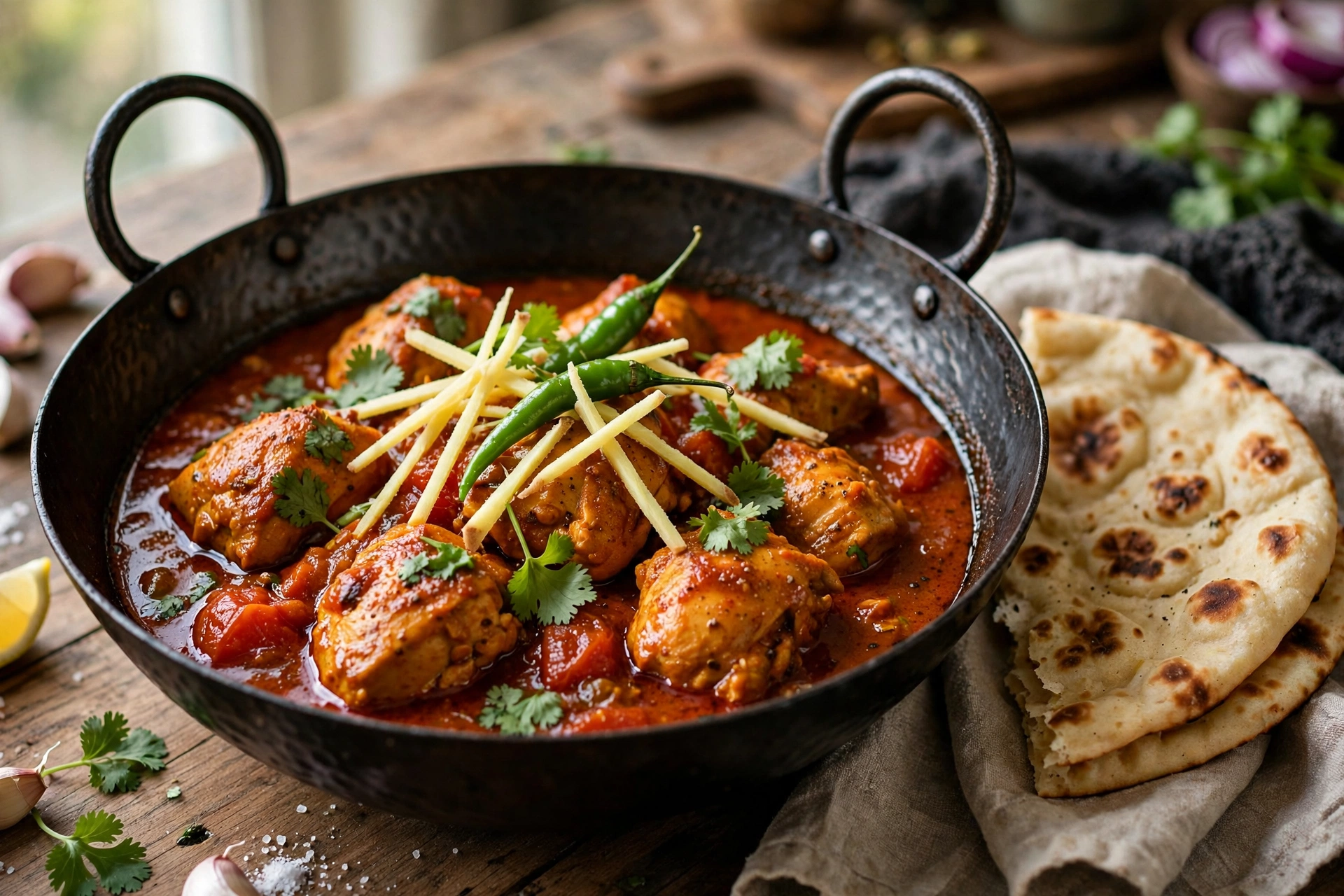
Step-by-Step Instructions
Step 1: Heat the Oil
In a wide karahi or heavy-bottomed pan, heat oil or ghee over medium-high heat. Add cumin seeds and let them sizzle for a few seconds.
Step 2: Cook the Chicken
Add the chicken pieces to the hot oil and sauté for 5–7 minutes until they turn slightly golden on the outside.
Step 3: Add Aromatics
Stir in the ginger-garlic paste and cook for 1–2 minutes until the raw smell disappears.
Step 4: Add Tomatoes and Spices
Add the chopped tomatoes, red chili powder, coriander powder, turmeric, and salt. Mix well, cover, and let it cook on medium heat for 10–12 minutes, stirring occasionally, until the tomatoes break down into a thick paste and the oil begins to separate.
Step 5: Simmer the Chicken
Add the slit green chilies, reduce the heat to low, cover, and let the chicken simmer for 15–20 minutes until fully cooked and tender. Stir occasionally to prevent sticking.
Step 6: Adjust the Gravy
If the gravy is too thick, add a splash of warm water and simmer for another 2–3 minutes. If you prefer a drier karahi, cook uncovered on high heat for the last few minutes to reduce excess liquid.
Step 7: Add the Finishing Touches
Sprinkle garam masala, julienned ginger, sliced green chilies, and fresh coriander leaves on top. Give it one final gentle stir. Add lemon juice for a subtle tang, if desired.
Step 8: Serve Hot
Turn off the heat and let the karahi rest for 2–3 minutes before serving. Serve hot with naan, roti, or steamed rice.
Pro Tips for the Best Chicken Karahi
- Use bone-in chicken for deeper flavor — bones release natural richness into the gravy.
- Don’t rush the tomato stage — cooking the tomatoes down properly is the secret to that authentic thick, oily karahi gravy.
- Fresh ginger and green chilies at the end add a burst of aroma and heat that makes restaurant-style karahi so distinct.
- Adjust spice level by increasing or decreasing red chili powder and green chilies according to your taste.
Serving Suggestions
Chicken Karahi pairs perfectly with:
- Fresh naan or tandoori roti
- Steamed basmati rice
- A side of raita (yogurt dip) to balance the spice
- Sliced onions and lemon wedges
Planning ahead? This karahi is perfect for meal prep – see our Easy Meal Prep Recipes for the Week.
Storage Tips
Chicken Karahi can be stored in an airtight container in the refrigerator for up to 3 days. Reheat gently on the stove with a splash of water to loosen the gravy. It also freezes well for up to 1 month.
For another beloved Pakistani classic, try our Indian Biryani.
Prep Time: 15 minutes Cook Time: 35 minutes Total Time: 50 minutes Servings: 4–5 people
Enjoy this classic, flavor-packed Chicken Karahi recipe that brings the taste of authentic Pakistani cuisine right to your kitchen!
Tomatoes, Heat, and Nothing to Hide Behind
Chicken karahi follows a completely different logic from most curries, and that is exactly why it tastes so good. There is no onion-based masala base. No cream. No long parade of ground spices. Instead, the sauce is built from tomatoes cooked down hard and fast in hot oil until they collapse into a thick, glossy coating. The tomatoes do three jobs at once: they are the sauce, the tang, and the rich red color.
High heat is the second key. Cooking in a karahi or a wide, heavy pan over strong heat keeps the chicken searing rather than steaming, and it drives the water out of the tomatoes quickly, so the oil rises to the surface, the classic sign that a karahi is ready. Fresh ginger, green chilies, and crushed black pepper, added through the cooking, keep the flavor bright and layered instead of flat, and a final shower of julienned ginger and fresh coriander gives the dish its restaurant finish.
The Ingredients, One by One
- Chicken: Bone-in chicken cut into small karahi-style pieces gives the most flavor, because the bones enrich the sauce as it cooks. Boneless thigh is the best substitute and stays juicy; boneless breast works, but add it a few minutes later and cook it gently so it does not dry out.
- Tomatoes: This dish stands or falls on its tomatoes. Use ripe, deep-red ones and cook them until fully broken down. In winter, good canned whole tomatoes, crushed by hand, beat pale fresh ones easily.
- Oil or ghee: Karahi is famously generous with oil, and that oil carries the flavor. Ghee gives a richer, more traditional taste. Prefer less? Spoon some off at the end, after it rises to the surface.
- Ginger and garlic: Freshly crushed or finely chopped is best. Jarred pastes work in a pinch but taste flatter, so add a little extra fresh julienned ginger at the end to compensate.
- Green chilies: Use fresh, firm chilies and adjust the count to your heat tolerance. Removing the seeds lowers the heat without losing the fresh chili flavor.
- Yogurt (optional): Some cooks whisk in 2 to 3 tablespoons of yogurt for a slightly tangy, creamier sauce, the style often called karahi with dahi. Add it on low heat and stir constantly so it does not split.
- No tomato option: For a white karahi, skip the tomatoes entirely and build the sauce with yogurt, cream, black pepper, and green chilies.
Karahi Technique, Step by Step
- Use the right pan. A karahi, wok, or wide heavy skillet with high sides is ideal. The wide surface helps the tomato moisture evaporate quickly.
- Dry the chicken well. Surface moisture is the enemy of a good sear. Pat the pieces dry before they go into the hot oil.
- Do not rush the tomatoes. Cook them until the mixture thickens, darkens slightly, and the oil separates at the edges. This stage, called bhunai, is where raw tomato taste turns into deep, cooked flavor.
- Add salt in stages. A little with the chicken, then adjust at the end once the sauce has reduced and concentrated.
- Finish fresh. The final ginger juliennes, green chilies, coriander, and a pinch of crushed black pepper go on at the end, off the fiercest heat, so they stay vivid.
Karahi Mistakes We See Often
- Adding water. Chicken and tomatoes release plenty of liquid. Added water turns a karahi into a soupy curry and dulls the flavor.
- Covering the pan the whole time. A lid traps steam and stops the sauce from reducing. Cook mostly uncovered so the gravy thickens and clings to the chicken.
- Using underripe tomatoes. Pale, hard tomatoes make the sauce sour and thin. Ripe tomatoes, or quality canned ones, give the right sweetness and body.
- Overloading on spices. Karahi is not a garam-masala-heavy dish. Black pepper, cumin, and coriander are supporting players; the tomatoes, ginger, and chilies lead.
- Walking away during the tomato stage. The sauce can catch on the bottom of the pan as it thickens. Stir regularly, scraping the base.
Regional Twists and Variations
- White karahi: Skip the tomatoes. Cook the chicken with ginger, garlic, green chilies, and black pepper, then finish with yogurt and a splash of cream for a pale, peppery sauce.
- Shinwari-style karahi: Keep it ultra simple with just tomatoes, green chilies, black pepper, and salt, the style famous in the northwest. Mutton is traditional there and needs a longer cook.
- Butter karahi: Finish with a knob of butter melted over the top for extra richness, a popular restaurant touch.
- Vegetable add-ins: Bell pepper strips or onions tossed in for the last few minutes add sweetness and crunch, though purists keep the dish chicken-only.
- Mutton or beef karahi: Use the same method with mutton pieces, adding a splash of water and extra cooking time until the meat is fully tender before finishing the sauce.
The Next Day: Storage and Reheating
Chicken karahi keeps well in an airtight container in the refrigerator for up to 3 days, and the flavor settles in beautifully overnight. It also freezes successfully for up to 2 months; the tomato-based sauce protects the chicken from drying out. Thaw overnight in the refrigerator. To reheat, warm it gently in a pan over medium heat with a small splash of water, stirring until the sauce loosens and the chicken is steaming hot. Then add a few fresh coriander leaves and ginger juliennes to wake the dish back up.
What to Put on the Table
- Hot naan or roghni naan for scooping up the sauce
- Tandoori roti or plain chapati for a lighter everyday meal
- Steamed basmati rice or a simple cumin rice
- A fresh kachumber salad of onion, tomato, and cucumber with lemon
- Mint raita or plain yogurt to cool the heat, plus a green salad on the side
Karahi Questions
Why is there no onion in chicken karahi?
Traditional karahi builds its sauce from tomatoes alone. Skipping onion keeps the flavor clean, tangy, and fast-cooking, which is the whole character of the dish.
How do I know when the karahi is done?
The chicken is fully cooked and tender, the sauce is thick enough to coat the back of a spoon, and the oil rises and glistens around the edges of the pan.
Can I make it less spicy?
Yes. Reduce the green chilies, remove their seeds, and lean on black pepper for warmth instead of heat. A spoonful of yogurt stirred in at the end softens the spice further.
What cut of chicken is best?
Bone-in pieces cut small are the restaurant standard and give the deepest flavor. Boneless thigh is the most forgiving substitute for home cooks.
Can I cook chicken karahi in a regular frying pan?
Yes. Use the widest, heaviest pan you have and keep the heat high so the tomatoes reduce rather than stew. A wok is the closest substitute for a karahi.
One Dish, Many Cities
Travel across Pakistan and the karahi changes character from city to city, which is part of its charm. In Lahore, cooks often finish the dish with a generous knob of butter and a heavier hand with green chilies, producing a rich, fiery result. The Shinwari style from the northwest strips the recipe back to its bones: meat, tomatoes, green chilies, black pepper, and salt, cooked in the meat’s own fat with nothing else competing for attention. Karachi versions sometimes add a spoonful of yogurt for tang and a slightly looser sauce. None of these styles is more correct than the others. They are regional answers to the same delicious question, and once you know the base method, adjusting the butter, yogurt, and chili levels lets you land on the version your table loves most.

3 Comments