
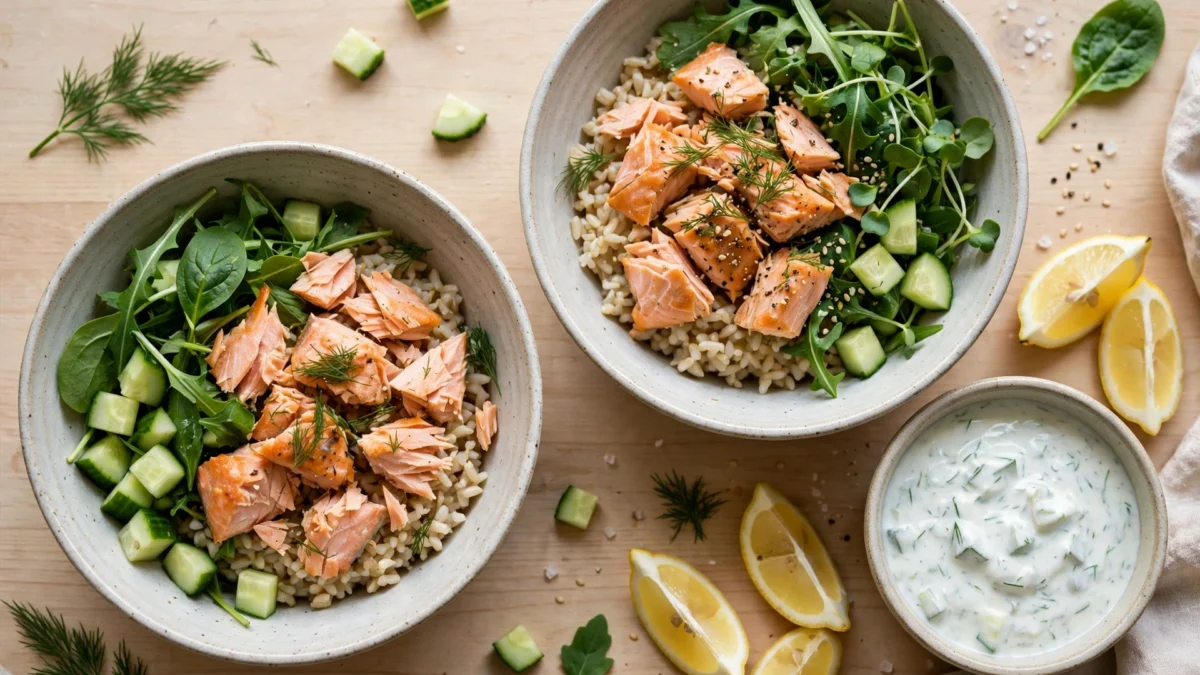
Some dinners ask for a lot and give back very little. This one is the opposite. Salmon rice bowls with cucumber yogurt sauce take about 25 minutes from start to finish, and most of that time the salmon is in the oven doing its own thing while you stir together a cool, creamy sauce and scoop rice into bowls.
It is a good first salmon recipe if you have never cooked fish at home. There is no flipping, no skin to peel off in the pan, no sauce that can split if you look away for a second. The oven handles the salmon, the yogurt sauce needs no cooking at all, and the whole bowl comes together from ingredients you can find at any mainstream U.S. supermarket.
What you end up with is a balanced plate in a bowl: warm salmon and rice, fresh cucumber and greens, and a tangy lemon dill sauce that ties it all together. It works just as well for a quick weeknight dinner as it does for a light lunch the next day.
Quick answer: Bake seasoned salmon at 400°F until it flakes easily, stir Greek yogurt with lemon juice and dried dill for the sauce, then build bowls with cooked rice, mixed greens, chopped cucumber and the salmon on top. Total time is about 25 minutes.
Why This Bowl Works So Well for Beginners
The smartest thing about this recipe is how it splits the work. The salmon goes into the oven first, and while it bakes you make the sauce and assemble the bowls. Nothing needs your full attention at the same moment, which is exactly what a beginner cook needs.
Baking is also the most forgiving way to cook salmon. A hot oven gives you even heat all around the fillet, so you do not have to judge when to flip or worry about the fish sticking to a pan. You watch for the flakes to separate easily with a fork, and that is your signal. If a fillet is a little thicker than the others, it just needs another minute or two.
The bowl format helps too. Rice, greens, cucumber and salmon all sit in their own space, so everyone at the table can take more of what they like and skip what they do not. A picky eater can leave the cucumber out of their bowl, and someone who loves the sauce can add an extra spoonful without changing anything else.
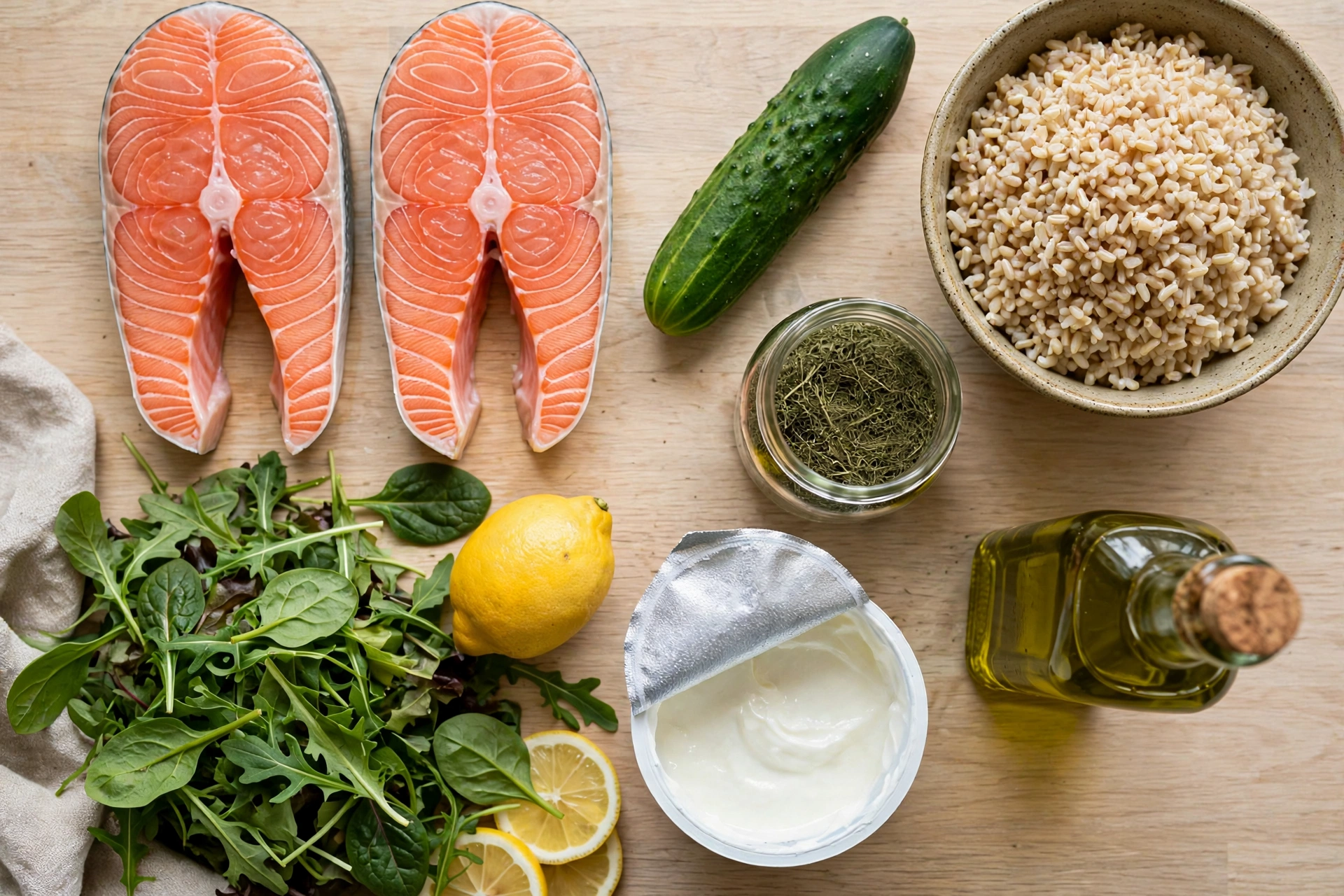
Ingredients
- 4 salmon fillets, about 4-5 oz each
- 3 cups cooked brown or white rice
- 1 cucumber, chopped
- 2 cups mixed greens
- 1/2 cup plain Greek yogurt
- 1 tbsp lemon juice
- 1 tsp dried dill
- 1 tbsp olive oil
Salt and pepper are the only seasoning the salmon needs, plus the olive oil you brush over the fillets before they go in the oven. Keep the fillets similar in size if you can, because a thin tail piece will cook much faster than a thick center cut. If your fillets are uneven, tuck the thin ends underneath so the thickness is more even across the pan.
For the rice, use whatever you already have cooked or can make quickly. Brown rice adds a nutty flavor and a chewier bite, while white rice is softer and milder. Both work. If you keep cooked rice in the fridge from an earlier meal, this bowl is a good way to use it up. Warm it through before building the bowls so the cold rice does not chill the salmon.
Plain Greek yogurt is the base of the sauce, and it matters that it is plain. Flavored or sweetened yogurt would throw the whole sauce off. Full fat or low fat both work, so use whichever you normally buy. The lemon juice brightens the yogurt, and the dried dill gives it that cool, herby flavor that pairs so well with salmon.
How to Make Salmon Rice Bowls with Cucumber Yogurt Sauce
Step 1: Heat the oven to 400°F and place the salmon on a lined pan. Line a rimmed sheet pan or baking pan with parchment paper. Parchment keeps the salmon from sticking and makes cleanup a lot easier. Set the fillets on the pan with a little space between them so the hot air can move around each one.
Step 2: Brush with oil, season lightly and bake until it flakes easily. Brush the tops of the fillets with the olive oil, then add a pinch of salt and pepper to each. Slide the pan into the oven and bake until the salmon flakes easily when you press it gently with a fork. The exact time depends on how thick your fillets are, so start checking a little early rather than a little late. Overcooked salmon turns dry fast, while a fillet that flakes cleanly is ready.
Step 3: Mix the yogurt, lemon and dill. While the salmon bakes, stir the Greek yogurt, lemon juice and dried dill together in a small bowl. If the sauce feels too thick to spoon over the bowls, thin it with a teaspoon of water at a time until it reaches a drizzling consistency. Taste it and add a pinch of salt if it needs one. This sauce takes about two minutes, and it is the part of the meal that makes everything taste finished.
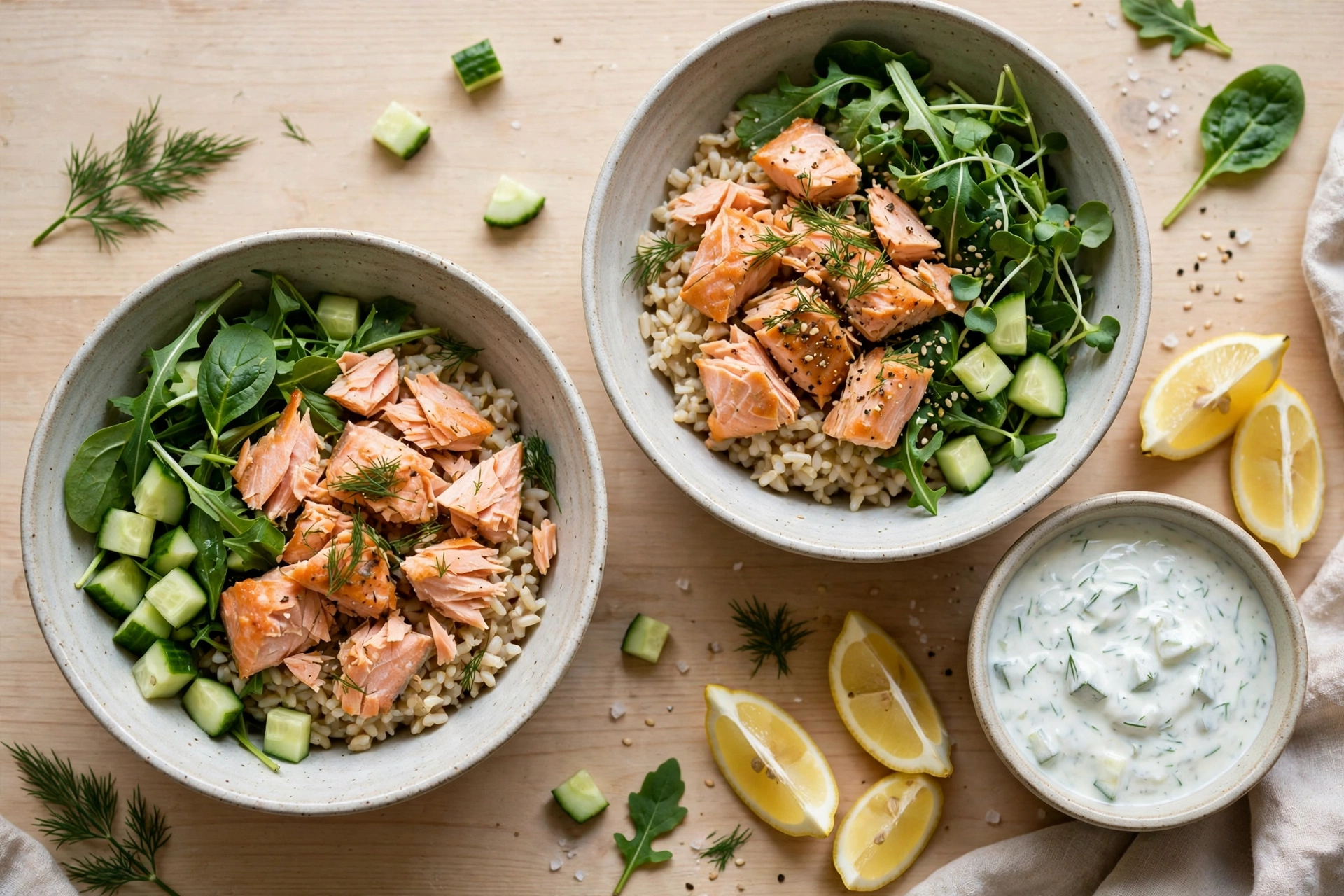
Step 4: Divide the rice, greens and cucumber among bowls and top with salmon and sauce. Spoon the rice into bowls first, then add the mixed greens and chopped cucumber beside it. Set a salmon fillet on top of each bowl and spoon the yogurt sauce over the salmon. A lemon wedge on the side is a nice touch if you have a lemon left over, but it is not required.
The Cucumber Yogurt Sauce Deserves Its Own Moment
It is tempting to treat the sauce as an afterthought, but it does a lot of the work in this bowl. The cool yogurt cuts through the richness of the salmon, the lemon keeps the flavors bright, and the dill adds a gentle herbal note that makes the whole bowl taste like more than the sum of its parts.
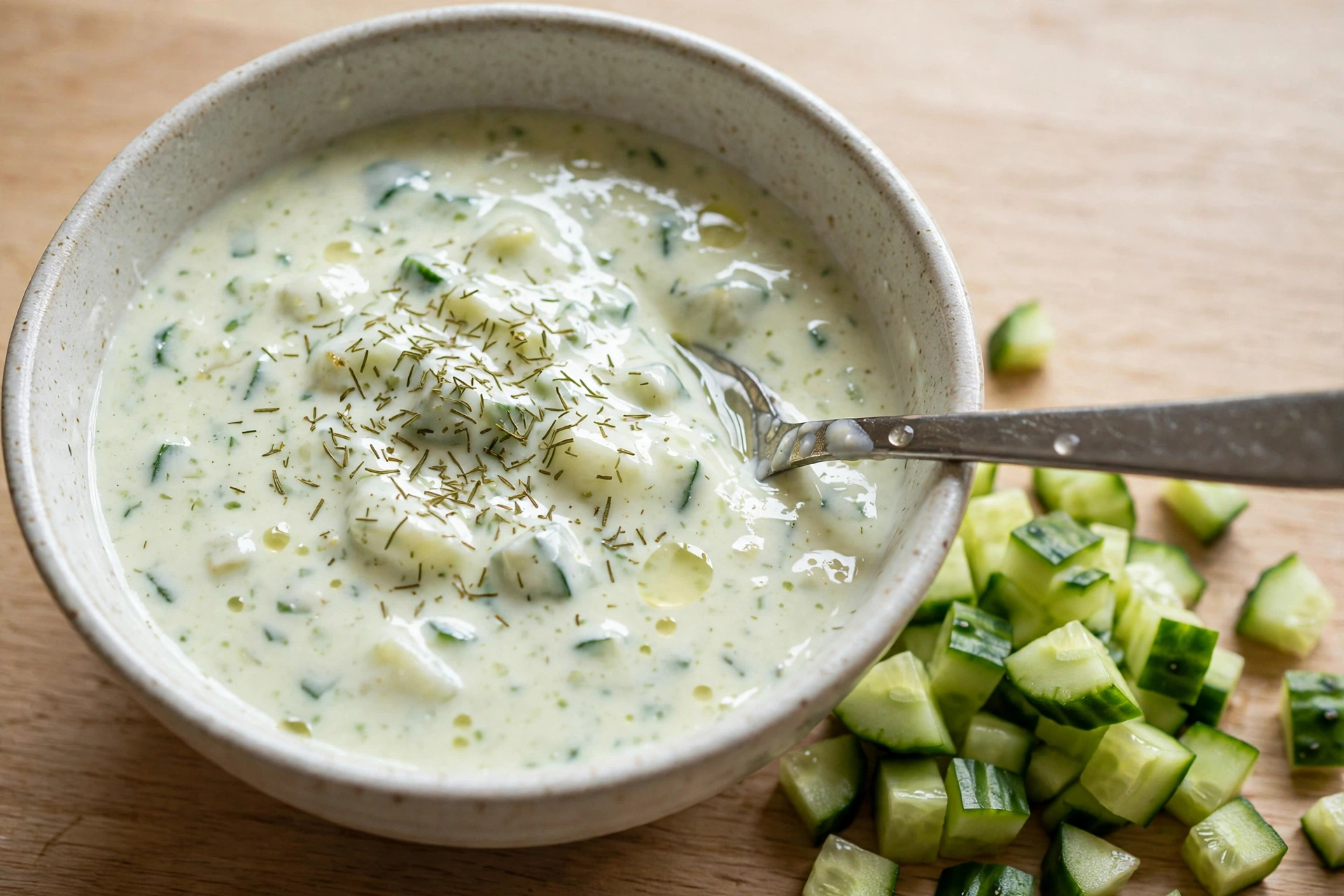
Make the sauce while the salmon is in the oven so the flavors have a few minutes to sit together. If you like a stronger lemon flavor, add the lemon juice a little at a time and taste as you go. The same goes for the dill. Dried dill is milder than fresh, so a full teaspoon gives a clear flavor without taking over.
The sauce also keeps well. If you have some left over, cover it and refrigerate it, and use it the next day as a dip for vegetables, a spread for sandwiches, or a sauce over grilled chicken. It will hold for a couple of days in the fridge, though it may thicken slightly. A small splash of water stirred in brings it back.
Tips for Flaky Salmon Every Time
Buy fillets that look moist and smell like the ocean, not like fish. If you are buying from a counter, ask for center cut pieces when you can, since they cook more evenly than tail pieces. Frozen fillets work fine too. Thaw them in the fridge overnight, or in a sealed bag under cold running water if you are short on time, and pat them dry before they go on the pan. Wet fillets steam instead of roasting.
Do not crowd the pan. Four fillets on a standard sheet pan have plenty of room, but if you double the recipe, use a second pan instead of squeezing everything onto one. Crowded salmon steams, and steamed salmon never gets that lightly browned edge that makes it taste roasted.
Let the salmon rest for a minute or two after it comes out of the oven. The fillets finish cooking gently from their own heat, and the juices settle. That short pause is the difference between a fillet that flakes into clean, moist pieces and one that falls apart dry on the plate.
If you own a food thermometer, salmon is usually done around 125°F to 130°F at the thickest part for a medium finish, though many home cooks prefer it a little more cooked through. The roundup method goes by flaking, which is a reliable visual check, so use whichever approach you trust more.
Easy Substitutions
Use canned salmon or tuna for an even easier lunch version. Drain it well, flake it into the bowls, and skip the oven entirely. The sauce and the fresh vegetables do the same job, and the meal comes together in the time it takes to cook the rice.
Quinoa can replace rice if that is what you have in the pantry. It cooks quickly, holds up well under the sauce, and adds a slightly nutty flavor. Couscous works too, and it is ready in about five minutes once the water boils. Farro is another good option if you like a chewier grain, though it takes longer to cook, so plan for that.
The greens are flexible as well. Baby spinach, arugula, or shredded lettuce all fit the bowl. If you have leftover roasted vegetables in the fridge, they can stand in for the cucumber, or sit next to it. The point of a bowl like this is that the structure stays the same while the details change with what you have.
Serving and Leftovers
Serve the bowls as soon as the salmon comes out of the oven, while the fish is warm and the rice is still steaming. Set the sauce on the table so everyone can add as much as they like. A simple side such as fruit, a green salad, or bread fits well if you want a little more on the table, though the bowl is filling on its own.
For leftovers, let everything cool promptly and store the components separately in covered containers in the fridge. Keeping the salmon, rice and sauce apart stops the rice from soaking up moisture and the greens from wilting. Reheat only the portion you plan to eat, and add the sauce and greens fresh when you serve it. Cooked salmon keeps for a couple of days refrigerated, and the sauce will hold about as long.
If you take this bowl to work or school, pack the sauce in a small separate container and keep the greens on top of the rice so they stay crisp until lunch. A quick warm up of the rice and salmon in the microwave, then the sauce spooned over the top, gives you a lunch that tastes like it was made that morning.
Frequently Asked Questions
Can I use frozen salmon fillets?
Yes. Thaw them fully in the fridge overnight or in a sealed bag under cold running water, then pat them dry before baking. Wet or partly frozen fillets cook unevenly and take longer than the recipe expects.
What if I do not have Greek yogurt?
Regular plain yogurt works, though the sauce will be a little thinner. You can also use sour cream in the same amount, but the flavor will be richer and less tangy. Either way, keep it plain and unsweetened.
Can I cook the salmon in a skillet instead?
You can, but the oven is simpler for this recipe. A skillet needs the fish flipped at the right moment and the skin can stick if the pan is not hot enough. Baking gives you even heat and no flipping, which is why the roundup method uses the oven.
Is this bowl good for meal prep?
It is. Cook the rice and salmon, mix the sauce, and store each part in its own container. The bowls come together in a few minutes at serving time, and the sauce stays fresh for a couple of days in the fridge.
If you like this kind of quick, beginner friendly meal, try the Roasted Chicken, Sweet Potato and Green Bean Plate or the Beginner Turkey and Vegetable Chili. For a sheet pan dinner with the same easy cleanup, the Sheet-Pan Lemon Garlic Chicken and Vegetables is a good next cook. This recipe comes from the Healthy Home Cooked Meal Recipes for Beginners collection, which has three more simple meals to try.
Ingredients
Method
- Heat oven to 400°F and place salmon on a lined pan.
- Brush with oil, season lightly and bake until it flakes easily and reaches your preferred doneness.
- Mix yogurt, lemon and dill; thin with a teaspoon of water if needed.
- Divide rice, greens and cucumber among bowls and top with salmon and sauce.