
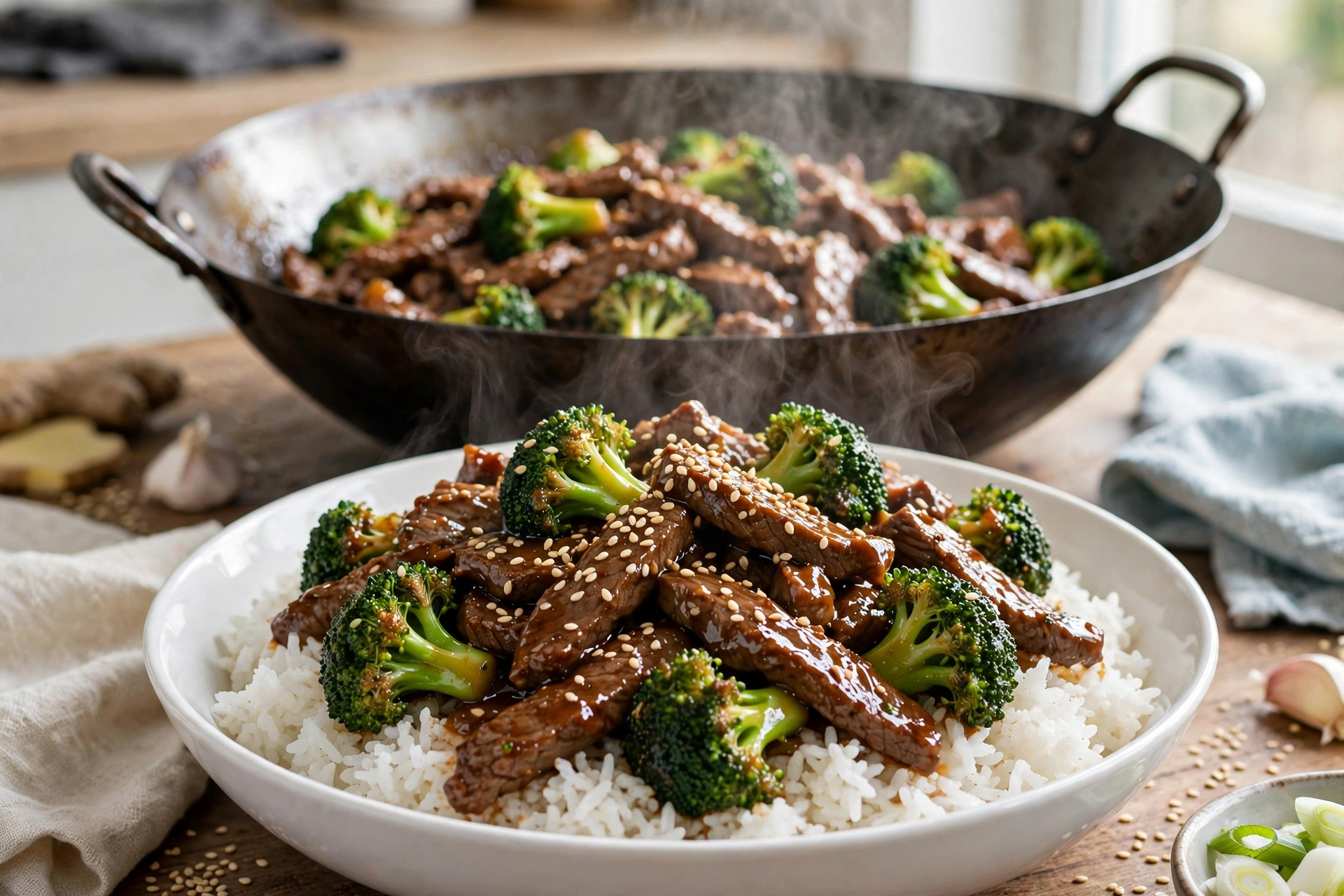
Put down the takeout menu — this easy beef and broccoli stir fry is on the table in 25 minutes flat, and it genuinely beats the restaurant version. We’re talking tender, caramelized strips of flank steak, crisp-tender broccoli florets, and a glossy garlic-ginger sauce that clings to every bite, all served over steaming rice. It’s faster than delivery, cheaper than takeout, and you control exactly what goes in. Once you nail the technique (it’s easier than you think), this takeout copycat will be in your weekly rotation for good.
Love fast, flavor-packed dinners? You’ll also want to try my Sheet Pan Sausage Gnocchi and Vegetables and Creamy Beef and Tortellini Skillet — both are weeknight heroes in under 35 minutes.
Why This Recipe Works
Great stir fry isn’t about a fancy wok — it’s about technique. High heat, dry beef, and a properly balanced sauce. Here’s why this recipe delivers takeout-level results at home:
- Velveting makes the beef unbelievably tender. A quick cornstarch coating (a classic Chinese technique called velveting) protects the meat from the wok’s intense heat, keeping every strip juicy and silky instead of tough and chewy.
- Searing in batches = browning, not steaming. Crowding the pan is the number one home stir-fry mistake. Two quick batches give you deeply caramelized beef with crispy edges.
- The sauce is perfectly balanced. Savory soy, a touch of sweetness, fresh garlic and ginger, and just enough cornstarch to turn glossy and coat — never gloopy, never watery.
- Crisp-tender broccoli. A brief blanch before stir-frying guarantees vibrant green, perfectly cooked florets — no raw centers, no mush.
- 25 minutes, start to finish. While the rice cooks, you prep and stir-fry. Dinner hits the table faster than the delivery driver could find your house.
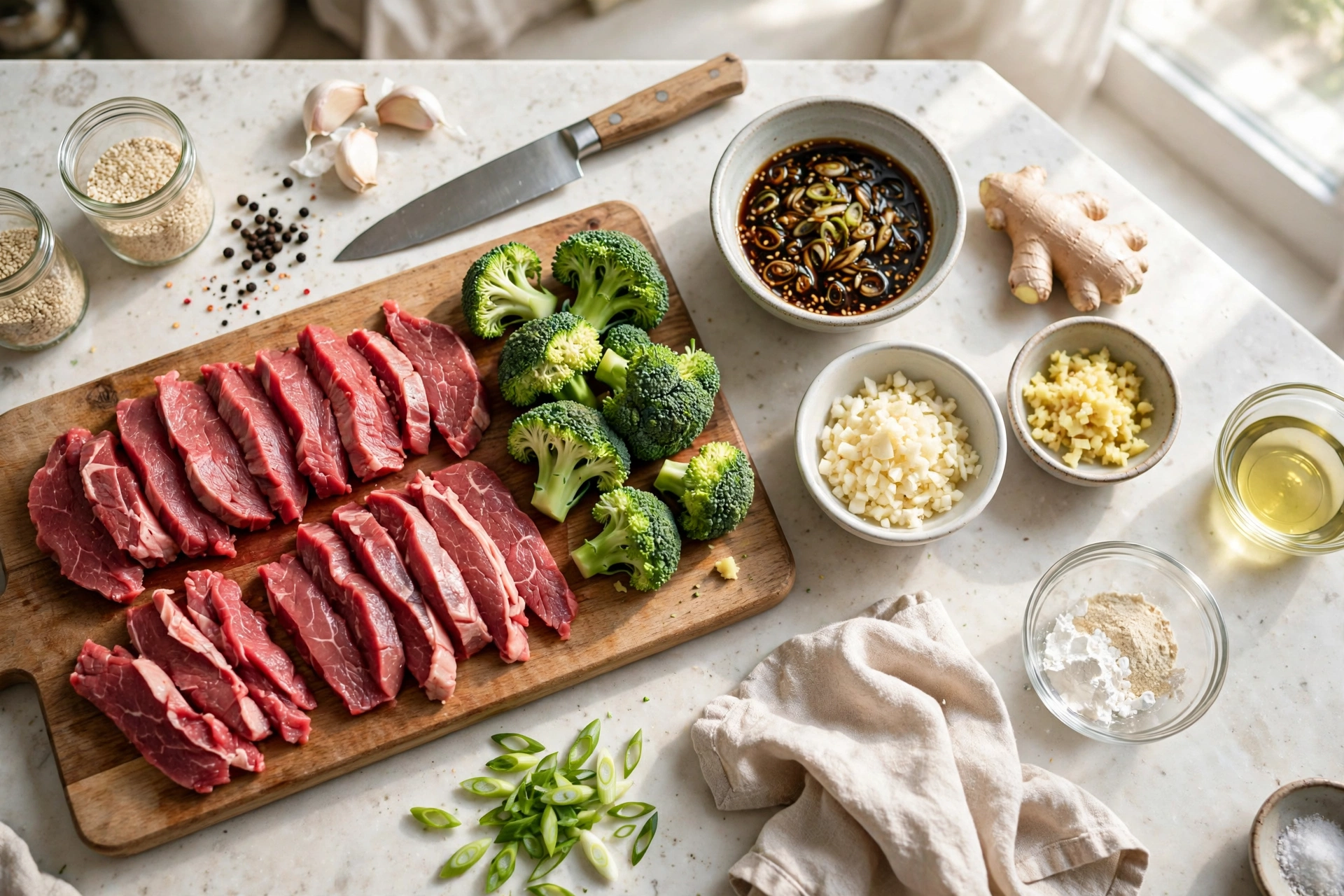
Ingredients You’ll Need
Most of these are pantry staples if you cook Asian-inspired food at all. All measurements are US standard:
- 1 lb flank steak, sliced very thin against the grain (about ⅛-inch strips)
- 1 tablespoon cornstarch (for velveting)
- 1 tablespoon soy sauce, plus ⅓ cup for the sauce (low-sodium preferred)
- 4 cups broccoli florets (about 1 large head)
- 3 tablespoons neutral oil with a high smoke point (avocado or peanut), divided
- 4 cloves garlic, minced
- 1 tablespoon fresh ginger, grated
- ⅓ cup low-sodium soy sauce
- 2 tablespoons oyster sauce
- 1 tablespoon brown sugar (or honey)
- 1 teaspoon toasted sesame oil
- 1 teaspoon cornstarch whisked with 2 tablespoons cold water
- ¼ teaspoon red pepper flakes (optional, for heat)
- 4 cups cooked jasmine rice, for serving
- 2 green onions, thinly sliced, for garnish
- 1 teaspoon sesame seeds, for garnish
How to Make Beef and Broccoli Stir Fry
- Velvet the beef. Toss the thin beef strips with 1 tablespoon cornstarch and 1 tablespoon soy sauce. Let it sit for 10–15 minutes while you prep everything else. (Do all your chopping now — stir-frying moves fast and there’s no time to prep mid-cook.)
- Blanch the broccoli. Bring a pot of salted water to a boil. Add the broccoli florets and cook for exactly 90 seconds, until bright green and just starting to soften. Drain immediately and rinse under cold water to stop the cooking. Pat dry — dry broccoli sears instead of steams.
- Mix the sauce. In a small bowl, whisk together the ⅓ cup soy sauce, oyster sauce, brown sugar, sesame oil, cornstarch slurry, and red pepper flakes (if using). Set by the stove.
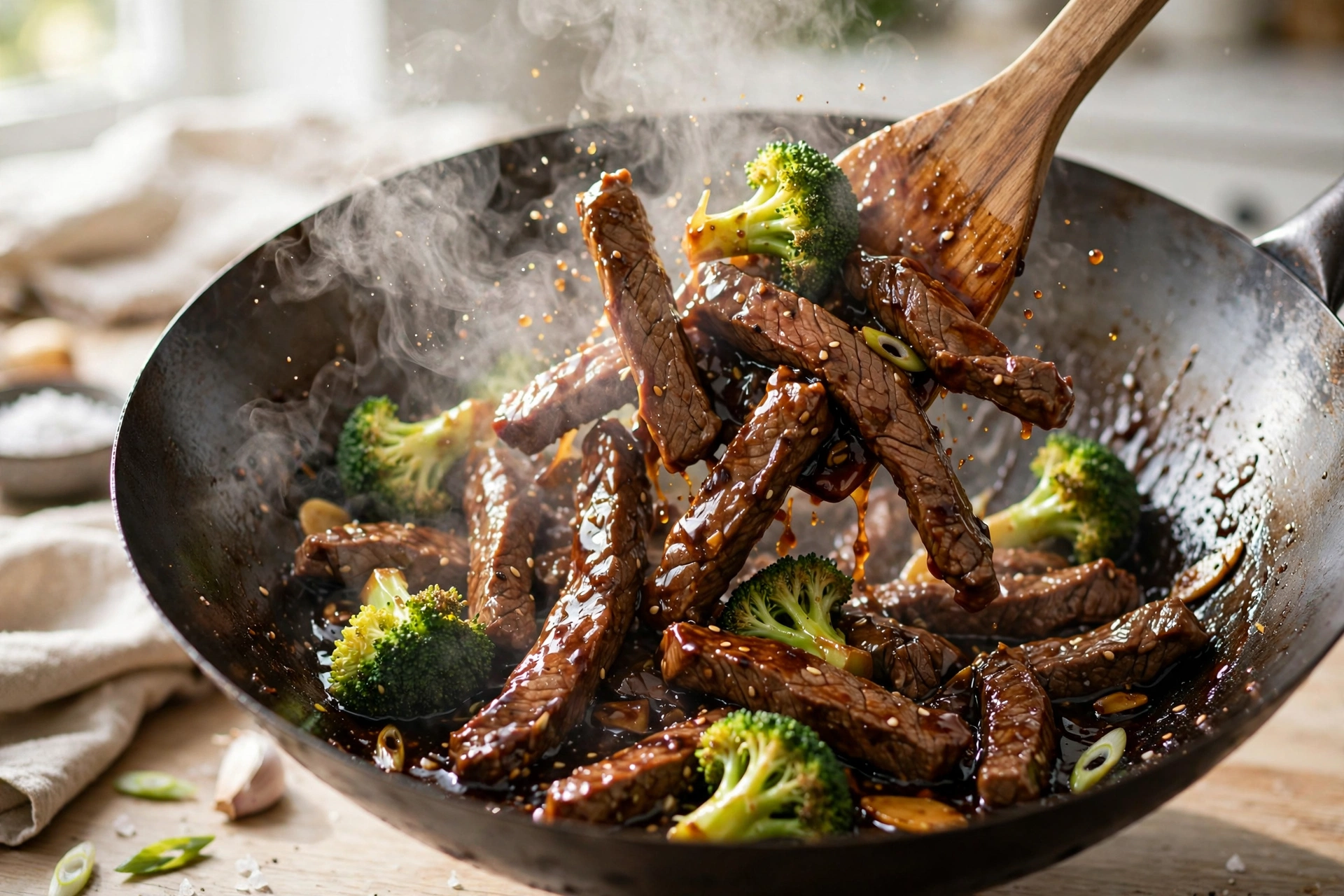
- Sear the beef. Heat 2 tablespoons of oil in a large wok or skillet over the highest heat your stove can manage until it just starts to smoke. Add half the beef in a single layer and sear undisturbed for 60–90 seconds, then flip and sear 60 seconds more. Transfer to a plate. Repeat with the remaining beef, adding the last tablespoon of oil if needed.
- Stir-fry the aromatics and broccoli. In the same screaming-hot wok, add the garlic and ginger; stir-fry 30 seconds until fragrant (don’t let them burn). Add the blanched broccoli and toss for 1–2 minutes to pick up some char.
- Sauce it up. Return the beef to the wok. Give the sauce a quick re-whisk (cornstarch settles) and pour it all in. Toss everything for 1–2 minutes until the sauce thickens to a glossy coat and bubbles.
- Serve immediately. Spoon over hot jasmine rice, shower with green onions and sesame seeds, and eat right away — stir fry waits for no one.
Pro Tips for Takeout-Level Stir Fry
- Freeze the flank steak for 20–30 minutes before slicing. Partially frozen meat slices paper-thin with almost no effort — and thin slices are the secret to tender stir-fry beef.
- Always slice against the grain. Look for the lines running through the meat and cut perpendicular to them. This shortens the muscle fibers and makes every bite tender.
- Get the wok ripping hot. If your beef isn’t sizzling aggressively the second it hits the pan, the pan isn’t hot enough. That sear is where the flavor lives.
- Pat everything dry. Moisture is the enemy of browning. Dry beef, dry broccoli, dry wok (before the oil).
- Mise en place is mandatory. Have every ingredient prepped and the sauce mixed before the wok gets hot. Stir-frying is a 10-minute sprint — there’s no pausing to mince garlic.
- Don’t skip the blanch. Raw broccoli in a stir fry either burns on the outside or stays crunchy-raw inside. Ninety seconds in boiling water solves it completely.
Easy Variations to Try
- Chicken and broccoli: Swap the flank steak for thin-sliced chicken breast; reduce the sear time slightly since chicken cooks faster.
- Shrimp stir fry: Use large shrimp, seared just 1 minute per side, and add them back at the very end so they stay snappy.
- Add more veggies: Sliced bell peppers, snap peas, baby corn, water chestnuts, or sliced mushrooms all work — add quick-cooking veg with the broccoli.
- Spicy Szechuan style: Double the red pepper flakes, add a teaspoon of chili crisp, and finish with a splash of black vinegar.
- Low-carb: Serve over cauliflower rice and swap the brown sugar for a sugar-free sweetener; use coconut aminos instead of soy sauce if you like.
- Meal-prep bowls: Portion the stir fry and rice into containers for lunches all week — it reheats beautifully. For another hearty make-ahead dinner, try my Hobo Casserole with Ground Beef.
Storage & Reheating Instructions
Store leftovers in an airtight container in the refrigerator for up to 4 days (store the rice separately if you can, so it doesn’t get mushy). Reheat in a hot skillet with a splash of water for 2–3 minutes — the microwave works, but the stovetop keeps the beef texture far better. The broccoli will soften a bit on reheating; that’s normal.
This stir fry also freezes well for up to 2 months. Cool completely, freeze in portions, and thaw overnight in the fridge before reheating in a skillet. Add a fresh sprinkle of green onions after reheating to wake it back up.
Frequently Asked Questions
What cut of beef is best for stir fry?
Flank steak is the classic choice — flavorful, affordable, and tender when sliced thin against the grain. Skirt steak, sirloin, or flat iron all work well too. Avoid stew meat or chuck, which need long cooking to tenderize.
Why is my stir-fry beef tough and chewy?
Three likely culprits: the slices were too thick, they were cut with (not against) the grain, or the pan was overcrowded so the meat steamed instead of seared. Fix all three and you’ll get tender beef every time.
Can I use frozen broccoli?
Yes, but thaw it completely and pat it very dry first — excess water will steam the stir fry and dilute the sauce. Fresh broccoli gives the best crisp-tender texture.
Is oyster sauce necessary?
It adds a deep, savory-sweet complexity that’s hard to replicate, but in a pinch you can substitute hoisin sauce or an extra tablespoon of soy sauce plus a teaspoon of sugar.
How do I keep the sauce from being too salty?
Use low-sodium soy sauce and taste before adding any extra salt. The oyster sauce also contributes saltiness, so the sauce is seasoned as written — adjust at the end, not during.
Can I double this recipe?
Yes, but sear the beef in even more batches (a crowded wok is the enemy). Mix a double batch of sauce, and consider using two pans for the final toss so everything heats evenly.
The Sauce, Explained: Getting That Glossy Takeout Finish
Ever wonder why restaurant stir fry sauce clings to every piece of broccoli while homemade versions pool at the bottom of the pan? One ingredient. Cornstarch.
It does two jobs here. First, a light coating on the beef before it hits the pan, which protects the meat and gives it that soft, velvety bite Chinese restaurants are famous for. Second, the cornstarch in the sauce itself thickens the moment it boils, turning thin soy-based liquid into a glossy glaze that coats instead of drips. Miss either step and the whole dish changes character.
Technique matters as much as the ingredient list. Mix the sauce cornstarch with cold liquid only. Stir it into hot sauce and you’ll get lumps that no amount of whisking fully fixes. And give the sauce a real boil, not a polite simmer, for about 30 seconds in the pan. Cornstarch only reaches full thickening power at a boil. Stop early and the sauce stays thin, even with the right amount in there.
Want it thicker for rice bowls? Add an extra teaspoon of cornstarch to the sauce. Thinner for noodle nights? A splash of water at the end loosens it right back up. Small lever, total control.