

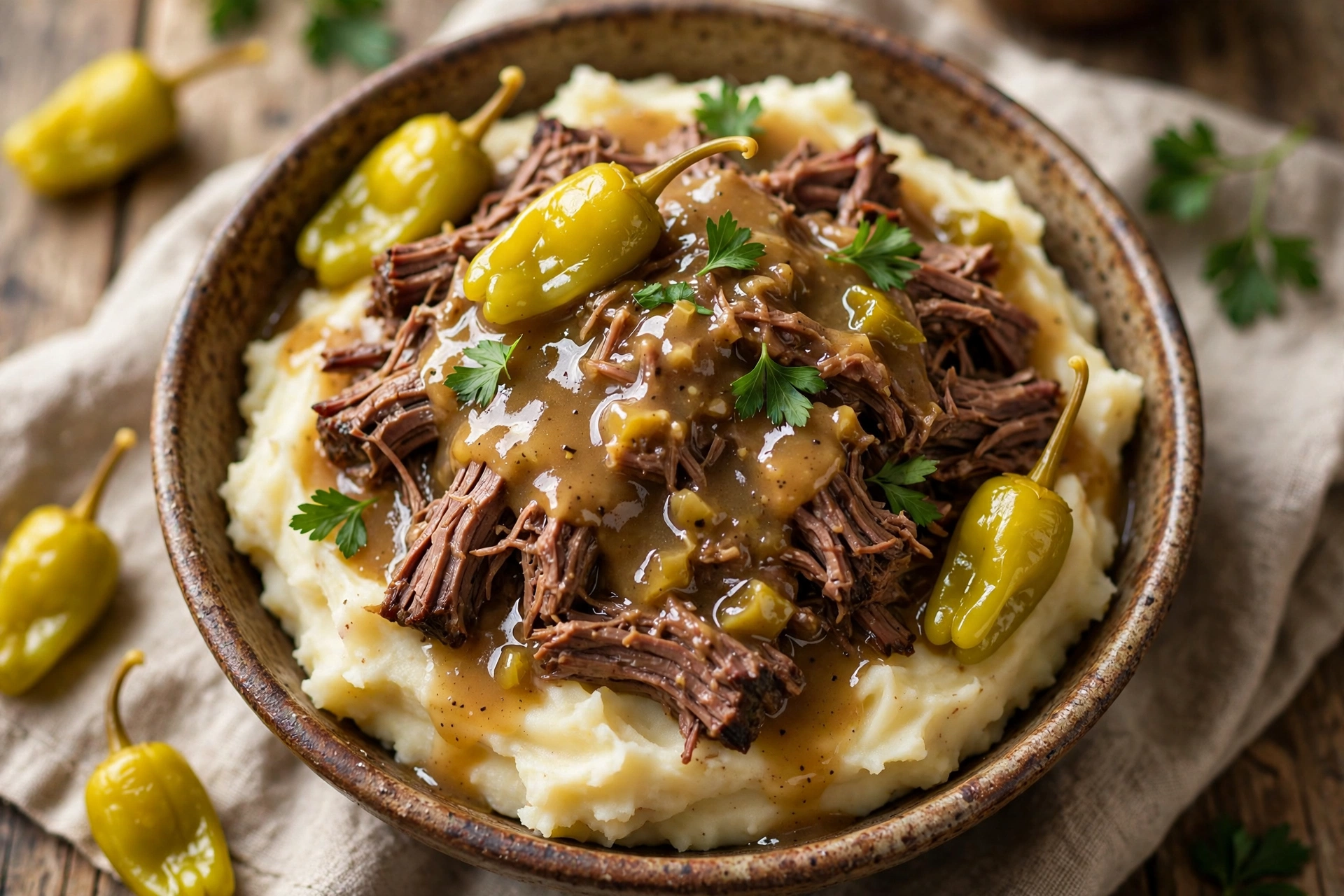
There’s a reason Mississippi pot roast broke the internet back in the 2000s and never left. Five ingredients, one slow cooker, and eight hours later you get beef so tender it falls apart under a fork, swimming in a tangy, buttery gravy.
Why You’ll Love This Recipe
- Only 5 ingredients. Chuck roast, ranch seasoning, au jus mix, butter, and pepperoncini.
- 15 minutes of prep. No chopping marathons.
- Foolproof. The slow cooker does everything.
- Leftovers are legendary. Sandwiches, tacos, over rice.
Ingredients
- 3 to 3.5 lbs boneless beef chuck roast
- 1 packet ranch seasoning mix
- 1 packet au jus gravy mix
- 1/2 cup unsalted butter
- 8-10 pepperoncini peppers plus 1/4 cup brine
How to Make It
- Season the roast with salt and pepper.
- Sear 2-3 min per side (optional).
- Load slow cooker: roast in, sprinkle ranch + au jus.
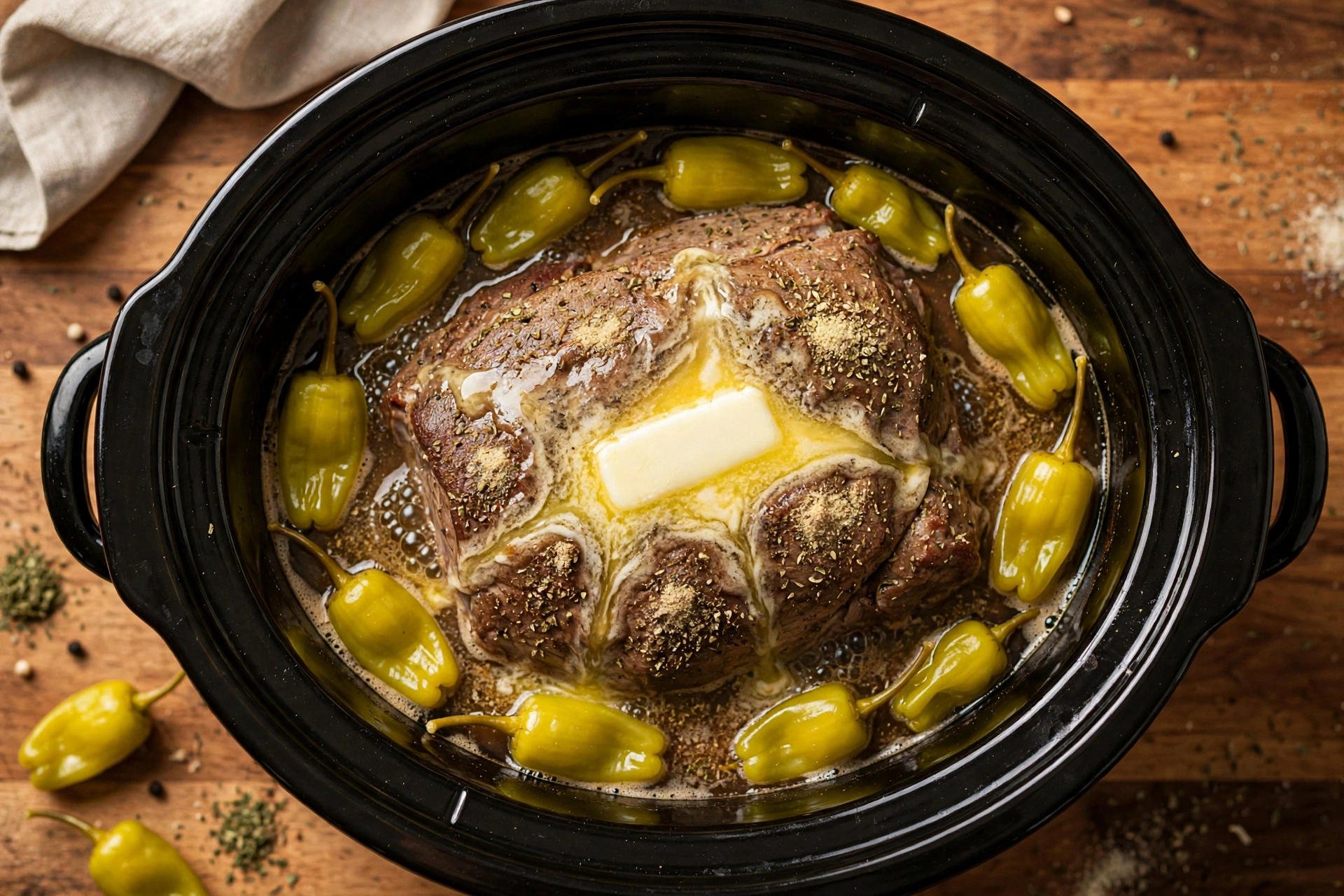
- Add butter on top, pepperoncini around, pour brine.
- Cook LOW 8 hrs or HIGH 4-5 hrs until shreddable.
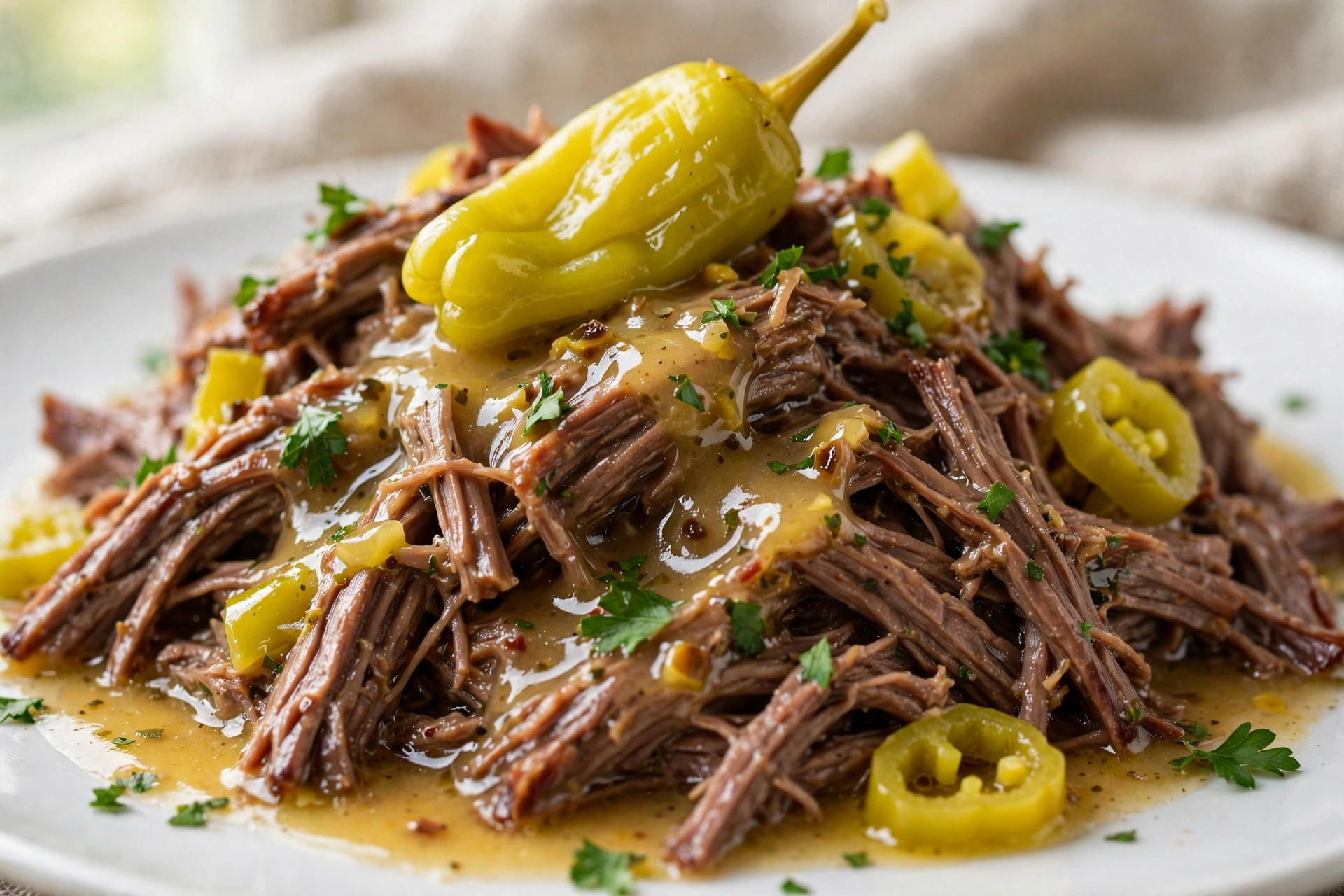
- Shred with forks, stir through juices.
- Serve over mashed potatoes, noodles, or in rolls.
Tips
- Don’t add water. The meat and butter make plenty of juice.
- LOW is best for fall-apart texture.
- Don’t lift the lid — costs 15-20 min each peek.
FAQ
Best cut?
Boneless beef chuck roast.
Spicy?
No — pepperoncini are mild.
Instant Pot?
Yes: sear, then HIGH pressure 60 min + 15 min release.
The Five-Ingredient Roast, in Full Detail
Seen the shortcut version? Five ingredients, a slow cooker, done. This is the complete picture, because the details are where this roast goes from good to the one people ask you about. A well-marbled chuck cooks low and slow in its own juices with ranch seasoning, au jus mix, butter, and pepperoncini until it collapses into tender shreds. The quiet hero is the pepperoncini brine. Its gentle acidity cuts straight through the rich beef and butter, so the finished gravy tastes savory and tangy instead of heavy. No browning required. No vegetables to chop. No sauce to build at the end, because the cooking liquid reduces into a ready-made gravy while the roast cooks.
The Full Ingredient List
- 3 to 3 1/2 pounds boneless beef chuck roast
- 1 teaspoon kosher salt
- 1/2 teaspoon black pepper
- 1 packet (1 ounce) ranch seasoning mix
- 1 packet (1 ounce) au jus gravy mix
- 1/2 cup (1 stick) unsalted butter, cut into 4 pieces
- 8 to 10 whole pepperoncini peppers
- 1/4 cup pepperoncini brine, from the jar
- Optional: 1 tablespoon cornstarch plus 1 tablespoon cold water, if you want a thicker gravy
Assembling the Roast
- Pat the chuck roast dry with paper towels on all sides. Drying the surface helps the salt and pepper cling and gives you a cleaner flavor base.
- Season the roast all over with the kosher salt and black pepper, pressing the seasoning in lightly with your hands.
- Place the roast in the bottom of a 6-quart slow cooker. If your roast is wider than the cooker, cut it into two large pieces so it sits in a single layer.
- Sprinkle the ranch seasoning mix evenly over the top of the roast, then sprinkle the au jus mix over that. Use the full packets; they provide both the salt and the deep savory backbone of the gravy.
- Lay the butter pieces across the top of the roast. As the roast cooks, the butter melts down through the meat and enriches the juices.
- Scatter the pepperoncini peppers around and on top of the roast, then pour the brine over everything.
- Cover and cook on LOW for 8 hours or on HIGH for 4 to 5 hours. The roast is done when it pulls apart easily with two forks and offers no resistance.
- Transfer the roast to a cutting board or large bowl and shred it with two forks, discarding any large pieces of fat. Skim excess fat from the cooking liquid if you like.
- Return the shredded beef to the slow cooker and stir it through the juices so every strand is coated. Let it sit on WARM for 10 minutes so the meat reabsorbs the gravy.
- For a thicker gravy, whisk the cornstarch and cold water into a slurry, stir it into the hot juices, cover, and cook on HIGH for 10 to 15 minutes until slightly thickened. Serve the roast hot over mashed potatoes, egg noodles, rice, or piled into toasted rolls.
Why Chuck and Brine Do the Heavy Lifting
Chuck is the ideal cut for this kind of cooking because it is threaded with fat and connective tissue. Over the long, gentle cook, that tissue converts to gelatin, which is what gives the meat its silky, fall-apart texture and makes the gravy feel rich without a drop of cream. Leaner cuts simply dry out under the same treatment. There is no technique that rescues them.
The two seasoning packets do different jobs, and it helps to know which is which. Ranch brings garlic, onion, and herbs. Au jus delivers concentrated beefy depth and salt. Together they season the meat from the outside in as the juices circulate. The butter melts slowly over the top, basting the roast for hours, and the pepperoncini brine supplies just enough acidity to keep the whole dish balanced. Nothing in the pot is decorative. Every ingredient earns its place.
Shopping Notes and Honest Swaps
- Chuck roast: Look for visible marbling all the way through. A rump roast or bottom round can stand in, but expect a slightly firmer, less shreddable result.
- Ranch seasoning: One standard packet equals roughly 3 tablespoons of homemade ranch seasoning. A low-sodium version works well if you are watching salt, since the au jus mix is salty too.
- Au jus mix: Brown gravy mix is the closest substitute. In a pinch, 1 tablespoon of beef bouillon granules plus 1 teaspoon of onion powder gets you there.
- Butter: Unsalted is preferred so you control the salt. Salted butter is fine; just reduce the added salt to 1/2 teaspoon.
- Pepperoncini: Mild, tangy peppers, not a heat bomb. Banana pepper rings plus a splash of their brine swap in well. Want real heat? Add 2 to 3 sliced jalapeños along with the pepperoncini.
- Dairy free: Replace the butter with a plant-based butter stick. The gravy will be slightly less rich and still excellent.
Habits for a Better Roast
- Do not add extra liquid. The roast releases plenty of its own juice. Broth or water dilutes the gravy into soup.
- Keep the lid closed. Every peek releases heat, and a slow cooker can take 20 to 30 extra minutes to recover from each one.
- Choose LOW when you can. Both settings work, but LOW gives the connective tissue more time to melt and produces noticeably more tender shreds.
- Shred in the juices. Always return the meat to the cooking liquid for at least 10 minutes. Dry-looking roast turns juicy again almost immediately.
- Taste before salting at the end. The packets and brine are salty; most batches need no extra salt at all.
Mistakes That Make a Tough Roast
- Using a lean cut. Eye of round and similar lean roasts turn stringy and dry here. Marbling is not optional in this recipe.
- Lifting the lid to check. Slow cookers lose heat slowly and regain it even more slowly. Trust the timer, test once at the end.
- Skipping the brine. The peppers alone do not deliver enough acidity. The 1/4 cup of brine is what keeps the rich gravy from tasting flat.
- Shredding too early. If the roast resists the fork, it is not done. Give it another 30 to 45 minutes and test again.
- Serving without the soak. Resting in the gravy is part of the recipe, not an optional finishing touch.
Five Ways to Take It
- Mississippi chicken: Swap the chuck for 2 1/2 pounds of boneless, skinless chicken thighs and cook on LOW for 4 to 5 hours. The same seasoning blend works beautifully.
- With vegetables: Add 1 pound of baby potatoes and 3 sliced carrots under the roast for a complete one-pot dinner. They cook in the seasoned juices and come out deeply flavored.
- Spicy: Add 1 teaspoon of crushed red pepper flakes and a few sliced jalapeños for a gentle, building heat.
- Sandwich style: Pile the shredded beef onto toasted hoagie rolls, top with provolone, and broil 1 to 2 minutes until the cheese melts. Serve small bowls of the cooking juices alongside for dipping.
- Low carb: Serve over cauliflower mash or roasted green beans instead of potatoes or noodles.
Storing the Roast and Its Gravy
Refrigerate leftovers in an airtight container with plenty of the cooking juices for up to 4 days. The flavor deepens overnight, so leftovers are genuinely something to look forward to here. For longer storage, freeze the shredded beef in its juices in freezer bags or containers for up to 3 months; the liquid protects the meat from freezer burn and dryness. Thaw overnight in the refrigerator before reheating.
To reheat, warm the beef gently in a covered skillet or saucepan over medium-low heat with a splash of its juices or water until steaming, about 8 to 10 minutes. In the microwave, cover and heat in 1-minute intervals, stirring between each, until hot throughout. Avoid high heat, which toughens the shreds.
What Belongs Beside the Roast
- Creamy mashed potatoes, the classic partner, made to catch the gravy
- Buttered egg noodles or steamed white rice
- Roasted green beans, glazed carrots, or simple buttered corn
- A crisp green salad with a tangy vinaigrette to balance the richness
- Soft dinner rolls or crusty bread for soaking up every drop
Roast Questions, Answered
Is Mississippi pot roast spicy?
No. Pepperoncini are mild, tangy peppers, and after hours of cooking they add flavor and gentle acidity rather than heat. If you want heat, jalapeños or red pepper flakes are the way in.
Can I cook this in the oven instead of a slow cooker?
Yes. Everything goes into a Dutch oven, covered, at 300°F for 3 to 3 1/2 hours, until the roast shreds easily.
Do I have to sear the roast first?
No. Searing adds a little extra depth, but the recipe is designed as a true dump-and-go meal and tastes excellent without it.
Why is my roast tough after 8 hours?
Almost certainly undercooked rather than overcooked. Connective tissue needs the full cooking time to melt. Give it another 30 to 60 minutes and test again; it should suddenly give way and shred easily.
Can I make this ahead for a crowd?
Absolutely. It doubles well in a large slow cooker and reheats beautifully, which makes it a smart choice for gatherings and meal prep alike.
Doubling, Halving, and Timing It Right
This recipe scales gracefully. For a double batch, use a 7 or 8-quart slow cooker and keep the ratios the same; the cooking time stays roughly the same as long as the roast pieces sit in a single layer, though an extra 30 minutes on LOW is a sensible cushion for a very full cooker. Halving it? Use a 3 or 4-quart cooker so the meat stays nestled in its juices instead of spread thin across a large base.
The most reliable doneness test is texture, not the clock. A finished roast shreds with almost no effort when you press it with a fork. Resistance means the collagen has not finished melting; close the lid and give it more time. And because the meat rests in its own seasoned juices, the window between done and overdone is wide and forgiving, which is one more reason this roast is such a dependable choice for busy days and gatherings alike.
| Detail | Value |
|---|---|
| Prep time | 10 minutes |
| Cook time | 8 hours on LOW or 4 to 5 hours on HIGH |
| Total time | About 8 hours 10 minutes on LOW |
| Servings | 6 to 8 |
| Method | Slow cooker |
You may also like Slow Cooker Beef Stroganoff (Creamy & Tender), Slow Cooker Beef Ragu with Pappardelle and Slow Cooker Chicken Tikka Masala (Easy and Creamy).



1 Comment