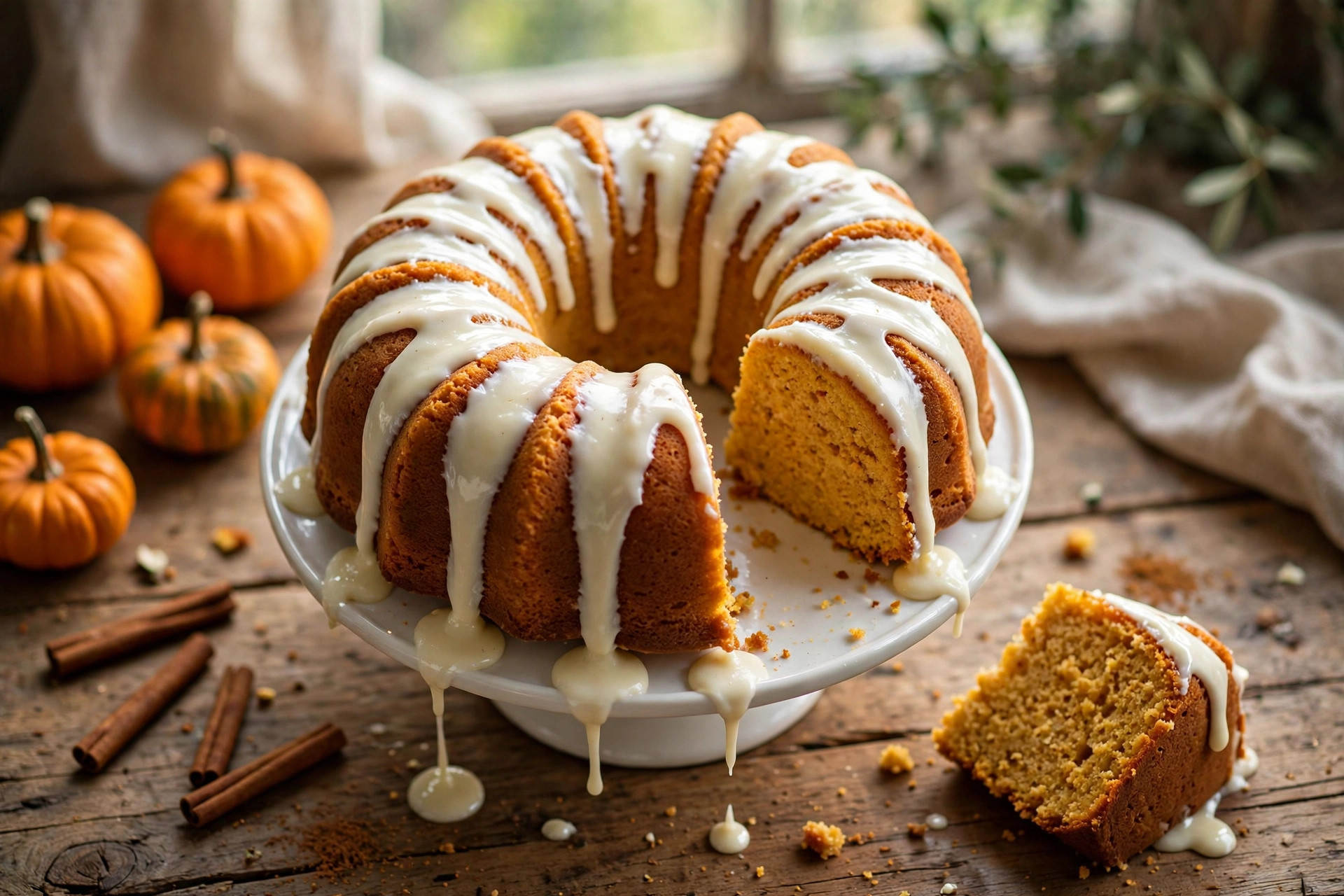
Step 1: Prep the oven and pan. Position a rack in the center and preheat to 350°F. Grease a 12-cup bundt pan thoroughly — getting into every fluted crevice — then dust with flour and tap out the excess. Good prep is the difference between a clean release and a stuck cake.
Step 2: Whisk the dry ingredients. In a large bowl, whisk together the flour, baking soda, baking powder, salt, cinnamon, ginger, nutmeg, and cloves until evenly combined. Whisking distributes the leaveners and spices so you get an even rise and consistent flavor in every bite.
Step 3: Cream the butter and sugars. In a stand mixer fitted with the paddle attachment (or a large bowl with a hand mixer), beat the softened butter, granulated sugar, and brown sugar on medium-high speed for 3 to 4 minutes, until pale, fluffy, and noticeably increased in volume. Do not rush this step — proper creaming builds the cake's structure.
Step 4: Add the eggs. Beat in the eggs one at a time on medium speed, mixing well after each addition and scraping down the bowl. The batter may look slightly curdled after the second egg; it will smooth out once the dry ingredients go in.
Step 5: Mix in the pumpkin and sour cream. On low speed, beat in the pumpkin puree, sour cream, and vanilla just until combined. The batter will turn a gorgeous deep orange and look thick and luscious.
Step 6: Combine wet and dry. Add the dry ingredients to the wet mixture in two additions, mixing on low speed just until no flour streaks remain. Overmixing develops gluten and makes bundt cakes tough and dense, so stop the mixer the moment the flour disappears.
Step 7: Fill the pan and bake. Spoon the batter into the prepared bundt pan and smooth the top. Tap the pan firmly on the counter two or three times to release air bubbles. Bake at 350°F for 55 to 65 minutes, until a long wooden skewer inserted into the thickest part comes out clean or with just a few moist crumbs.
Step 8: Cool in the pan, then invert. Cool in the pan on a wire rack for exactly 15 minutes — no longer, or the sugars start to stick. Run a thin knife around the edge and center tube, place the rack over the pan, and flip in one confident motion.
Step 9: Cool completely before glazing. Let the cake cool fully on the rack, about 1 hour. Glazing a warm cake melts the glaze into a thin, transparent layer instead of the thick, pretty drizzle you want.
Step 10: Make the cream cheese glaze. Beat the softened cream cheese with a hand mixer until completely smooth, about 1 minute. Add the sifted powdered sugar, 2 tablespoons of milk, vanilla, and salt; beat until smooth and pourable. Add the remaining tablespoon of milk if needed — you want it thick enough to coat a spoon but fluid enough to drip.
Step 11: Glaze and serve. Slowly pour or spoon the glaze over the top of the cooled cake, letting it drip naturally down the fluted sides. Let it set for 15 to 20 minutes before slicing with a serrated knife. Serve at room temperature.