Step 1: Preheat the oven. Position a rack in the center and preheat to 400°F. High heat is essential here — it caramelizes the squash's natural sugars and gives the feta those irresistible golden edges.
Step 2: Load the baking dish. Spread the cubed butternut squash in a 9x13-inch baking dish in a single layer. Nestle the block of feta in the center and tuck the whole garlic cloves around it. Drizzle everything with the olive oil.
Step 3: Season generously. Sprinkle the Italian seasoning, red pepper flakes if using, salt, and black pepper evenly over the squash and feta. Toss the squash cubes gently with your hands so every piece is coated in oil and seasoning, keeping the feta block intact in the middle.
Step 4: Roast until caramelized. Bake at 400°F for 35 to 40 minutes, until the squash is fork-tender with deep golden-brown caramelized edges and the feta is soft, slumped, and lightly browned on top. Your kitchen will smell incredible — sweet, savory, and garlicky.
Step 5: Boil the pasta. While the squash roasts, bring a large pot of generously salted water to a rolling boil. Cook the pasta according to package directions until just al dente — it will finish in the hot sauce. Before draining, scoop out at least 1 cup of the starchy pasta water and set it aside.
Step 6: Mash into a sauce. Remove the baking dish from the oven. Using a fork or potato masher, mash the roasted squash, softened feta, and garlic cloves together right in the dish until you have a thick, rustic sauce. A few small chunks of squash are welcome — they add texture.
Step 7: Loosen with pasta water. Pour in 1/2 cup of the reserved hot pasta water and stir vigorously. The starch emulsifies with the olive oil and feta to create a glossy, creamy sauce. Add more pasta water a splash at a time until the sauce coats a spoon but still flows.
Step 8: Toss with pasta. Add the drained hot pasta directly to the baking dish (or transfer everything to the pasta pot if the dish is too full). Toss thoroughly for a full minute so every ridge and tube is coated in sauce.
Step 9: Finish fresh. Stir in the torn basil and lemon zest. The basil wilts slightly into the hot pasta and the lemon zest lifts all the richness with a bright, fresh note. Taste and adjust salt and pepper — feta varies in saltiness.
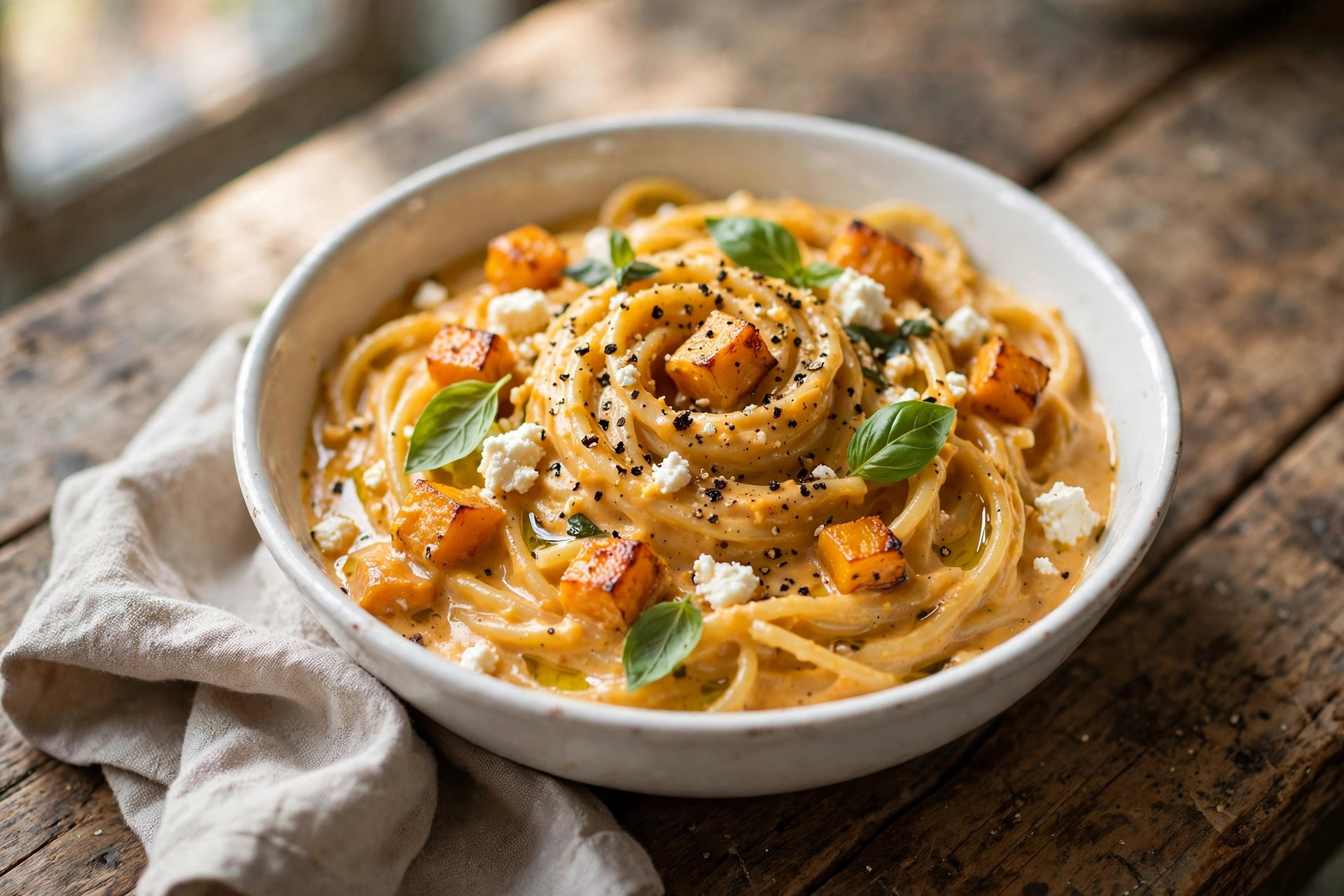
Step 10: Serve immediately. Divide among warm bowls, drizzle with a thread of good olive oil, and shower with freshly grated Parmesan and cracked black pepper if you like. This pasta waits for no one — serve it the moment it is tossed.