
The Fall Upgrade to Viral Baked Feta Pasta
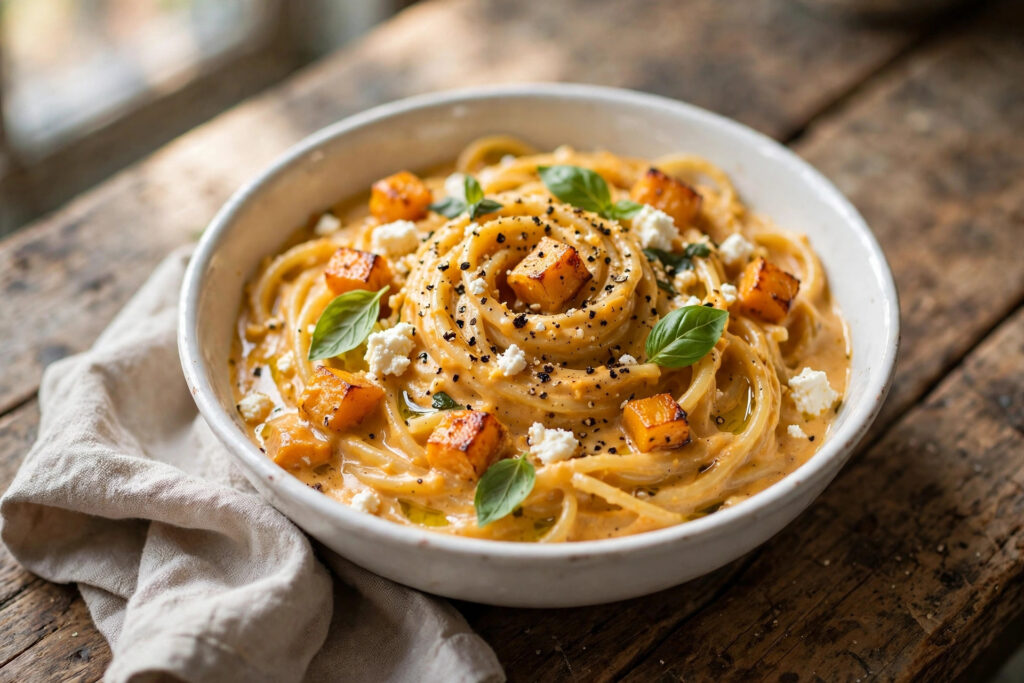
This butternut squash baked feta pasta takes the internet-famous baked feta pasta and gives it a cozy autumn makeover. Sweet, caramelized butternut squash roasts right alongside a block of feta until both are soft and golden at the edges. Then you mash them together into a creamy, luscious sauce — no cream required — and toss it with hot pasta and a splash of starchy pasta water.
I love this recipe because it tastes like you spent an hour building a sauce, when really the oven did all the work in one pan. The natural sugars in the squash caramelize beautifully at high heat, the feta turns salty and spreadable, and roasted garlic ties it all together. It is vegetarian, weeknight-fast, and the kind of dinner that makes people ask for the recipe before they have finished their first bowl.
Why You’ll Love This Recipe
- One pan, zero fuss. The sauce roasts in a single baking dish while the pasta boils — dinner with almost no active cooking.
- Creamy without cream. Roasted squash and melted feta blend into a naturally silky sauce that feels indulgent but light.
- Sweet-salty perfection. Caramelized squash, briny feta, and roasted garlic hit every note in one bite.
- Vegetarian and crowd-friendly. Hearty enough for meat lovers, meatless for everyone else — it pleases the whole table.
- Ready in under an hour. Fifteen minutes of chopping, forty minutes of hands-off roasting, and dinner is done.
Ingredients
For the Roasted Sauce
- 1 medium butternut squash (about 2 1/2 pounds), peeled, seeded, and cut into 3/4-inch cubes
- 1 (8-ounce) block feta cheese (not crumbled)
- 4 garlic cloves, peeled and left whole
- 1/3 cup extra-virgin olive oil, plus more for drizzling
- 1 teaspoon Italian seasoning
- 1/2 teaspoon red pepper flakes (optional)
- 1 teaspoon kosher salt
- 1/2 teaspoon freshly ground black pepper
For the Pasta
- 12 ounces short pasta (penne, rigatoni, or fusilli)
- 1/2 cup reserved pasta water, plus more as needed
- 1/2 cup fresh basil leaves, torn
- 1 teaspoon lemon zest
- Freshly grated Parmesan, for serving (optional)
A few notes on key ingredients: Use a block of feta packed in brine, not pre-crumbled — crumbled feta is coated in anti-caking starch and will not melt into a creamy sauce. Cut the squash into even 3/4-inch cubes so every piece roasts at the same rate; oversized chunks stay hard while small ones burn. Short, ridged pasta like rigatoni grabs the thick sauce far better than long noodles. And do not skip reserving the pasta water — its starch is what turns the mashed squash and feta into a glossy sauce that clings to every piece.
How to Make Butternut Squash Baked Feta Pasta
- Preheat the oven. Position a rack in the center and preheat to 400°F. High heat is essential here — it caramelizes the squash’s natural sugars and gives the feta those irresistible golden edges.
- Load the baking dish. Spread the cubed butternut squash in a 9×13-inch baking dish in a single layer. Nestle the block of feta in the center and tuck the whole garlic cloves around it. Drizzle everything with the olive oil.
- Season generously. Sprinkle the Italian seasoning, red pepper flakes if using, salt, and black pepper evenly over the squash and feta. Toss the squash cubes gently with your hands so every piece is coated in oil and seasoning, keeping the feta block intact in the middle.
- Roast until caramelized. Bake at 400°F for 35 to 40 minutes, until the squash is fork-tender with deep golden-brown caramelized edges and the feta is soft, slumped, and lightly browned on top. Your kitchen will smell incredible — sweet, savory, and garlicky.
- Boil the pasta. While the squash roasts, bring a large pot of generously salted water to a rolling boil. Cook the pasta according to package directions until just al dente — it will finish in the hot sauce. Before draining, scoop out at least 1 cup of the starchy pasta water and set it aside.
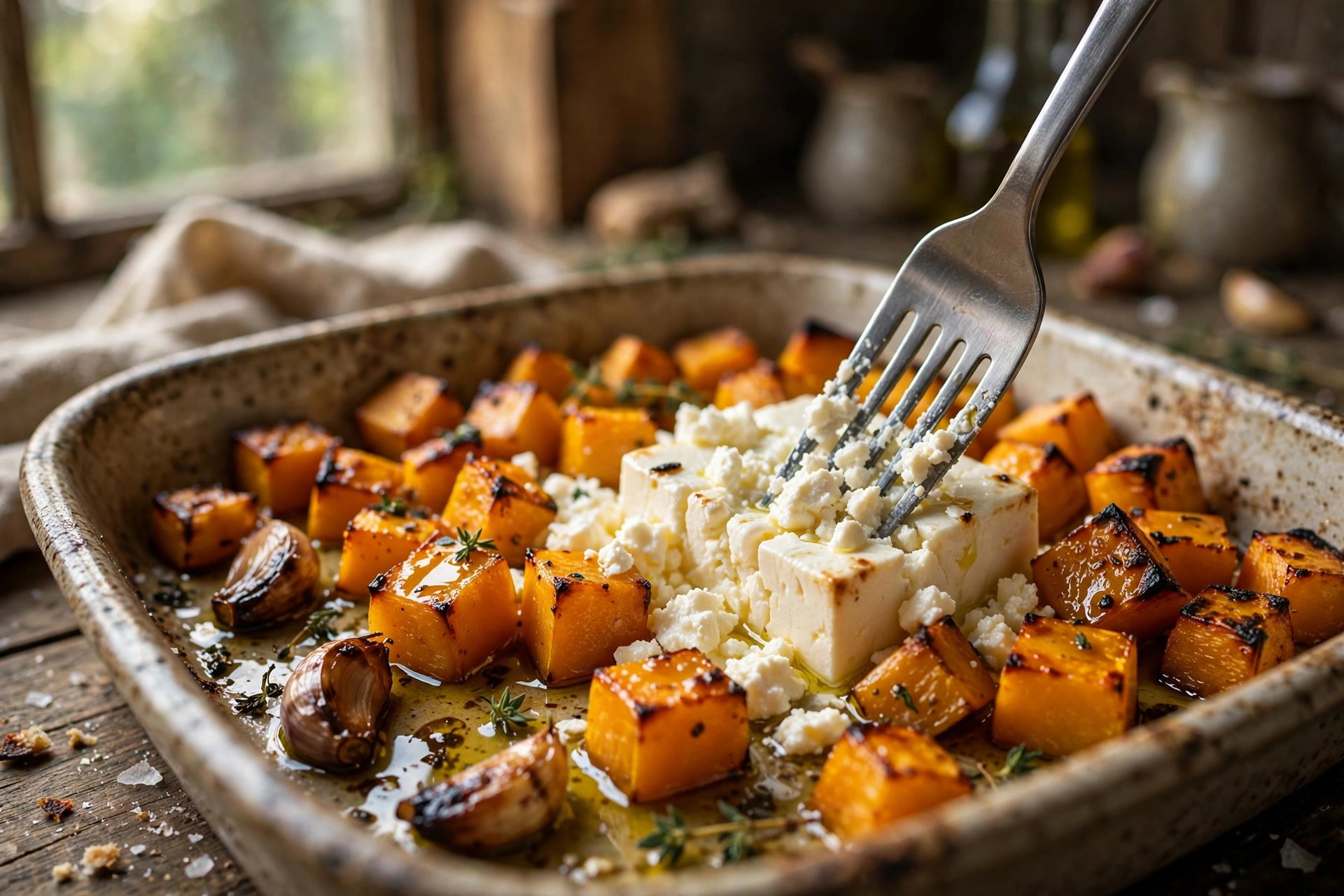
- Mash into a sauce. Remove the baking dish from the oven. Using a fork or potato masher, mash the roasted squash, softened feta, and garlic cloves together right in the dish until you have a thick, rustic sauce. A few small chunks of squash are welcome — they add texture.
- Loosen with pasta water. Pour in 1/2 cup of the reserved hot pasta water and stir vigorously. The starch emulsifies with the olive oil and feta to create a glossy, creamy sauce. Add more pasta water a splash at a time until the sauce coats a spoon but still flows.
- Toss with pasta. Add the drained hot pasta directly to the baking dish (or transfer everything to the pasta pot if the dish is too full). Toss thoroughly for a full minute so every ridge and tube is coated in sauce.
- Finish fresh. Stir in the torn basil and lemon zest. The basil wilts slightly into the hot pasta and the lemon zest lifts all the richness with a bright, fresh note. Taste and adjust salt and pepper — feta varies in saltiness.
- Serve immediately. Divide among warm bowls, drizzle with a thread of good olive oil, and shower with freshly grated Parmesan and cracked black pepper if you like. This pasta waits for no one — serve it the moment it is tossed.
Pro Tips for the Best Results
- Do not crowd the squash. A single layer with space between cubes lets hot air circulate and caramelize the edges. Piled-up squash steams instead of roasting and turns mushy.
- Salt your pasta water like the sea. The pasta absorbs this seasoning as it cooks, and bland pasta will dull the whole dish no matter how good the sauce is.
- Reserve more pasta water than you think. Scoop out a full cup before draining — you can always discard extra, but you cannot get it back once the pasta is drained.
- Mash while everything is hot. Feta firms up as it cools, so mash the sauce the moment the dish comes out of the oven for the creamiest result.
- Taste before adding more salt. Feta is naturally salty and brands differ. Season the finished pasta, not just the components, to avoid over-salting.
- Buy pre-cut squash to save time. On busy nights, a bag of pre-cut butternut squash from the produce section cuts prep to five minutes with no peeling required.
Variations
- Add crispy sage. Fry 12 fresh sage leaves in 2 tablespoons of butter until crisp, about 1 minute, and crumble over each bowl. Sage and butternut squash are a classic pairing for a reason.
- Make it meaty. Brown 1/2 pound of Italian sausage or pancetta and stir it into the finished pasta. The savory meat balances the squash’s sweetness beautifully.
- Go dairy-free. Replace the feta with a dairy-free feta-style block and finish with a squeeze of lemon juice instead of Parmesan. The roasted squash still delivers plenty of creamy body.
- Add greens. Wilt 3 cups of baby spinach or chopped kale into the hot pasta right after tossing — the residual heat softens them in under a minute and adds color and nutrition.
Storage & Reheating
Refrigerate leftovers in an airtight container for up to 4 days. The sauce thickens considerably when cold — reheat gently in a skillet over medium-low heat with a splash of water or broth, stirring, until creamy again. You can also microwave individual portions in 1-minute bursts, stirring between each. For food safety, reheat to 165°F throughout, per USDA guidance. I do not recommend freezing this dish; the feta’s texture turns grainy after thawing. It is best enjoyed fresh or as next-day leftovers.
Frequently Asked Questions
Can I make butternut squash baked feta pasta ahead of time?
Partially. You can roast the squash and feta up to 2 days ahead and refrigerate the baking dish covered. When ready to serve, warm it in a 350°F oven for 15 minutes, mash, and toss with freshly cooked pasta and hot pasta water. The dish is at its absolute best served immediately, though.
What if I cannot find a block of feta?
The block is important because crumbled feta does not melt properly. If you truly cannot find one, use a block of halloumi or a creamy goat cheese log instead — both soften beautifully in the oven. In a pinch, two 4-ounce blocks work the same as one 8-ounce block.
Is this recipe gluten-free adaptable?
Yes, easily. Swap the regular pasta for your favorite gluten-free short pasta and cook it 1 minute less than the package directs, since it continues cooking in the hot sauce. Everything else in the recipe is naturally gluten-free — just check your Italian seasoning blend for hidden additives.
Why is my sauce too thick?
The sauce tightens up fast as it cools, which is normal. The fix is simple: add more hot pasta water, a few tablespoons at a time, tossing vigorously until it loosens into a glossy sauce that coats the pasta. If you already discarded the pasta water, hot tap water with a pinch of salt works.
Can I use frozen butternut squash?
Yes, with one adjustment. Thaw it completely and pat it very dry with paper towels first — frozen squash releases a lot of water that prevents caramelization. You may also need to add 5 to 10 minutes to the roast time. Fresh squash gives the best browning, but frozen works on busy nights.
Recipe Snapshot
- Prep Time: 15 mins
- Cook Time: 40 mins
- Total Time: 55 mins
- Servings: 6
- Calories: ~520 per serving
- Course: Dinner
- Cuisine: American
This butternut squash baked feta pasta proves that the simplest method — one pan, high heat, good ingredients — often produces the most craveable dinners. Put it on your fall weeknight rotation and thank me later. If you loved the baked feta technique, try our creamy beef tortellini skillet for another easy pasta night, or start your meal with a bowl of easy crockpot pumpkin soup. For more weeknight inspiration, see our easy weeknight dinner ideas.