
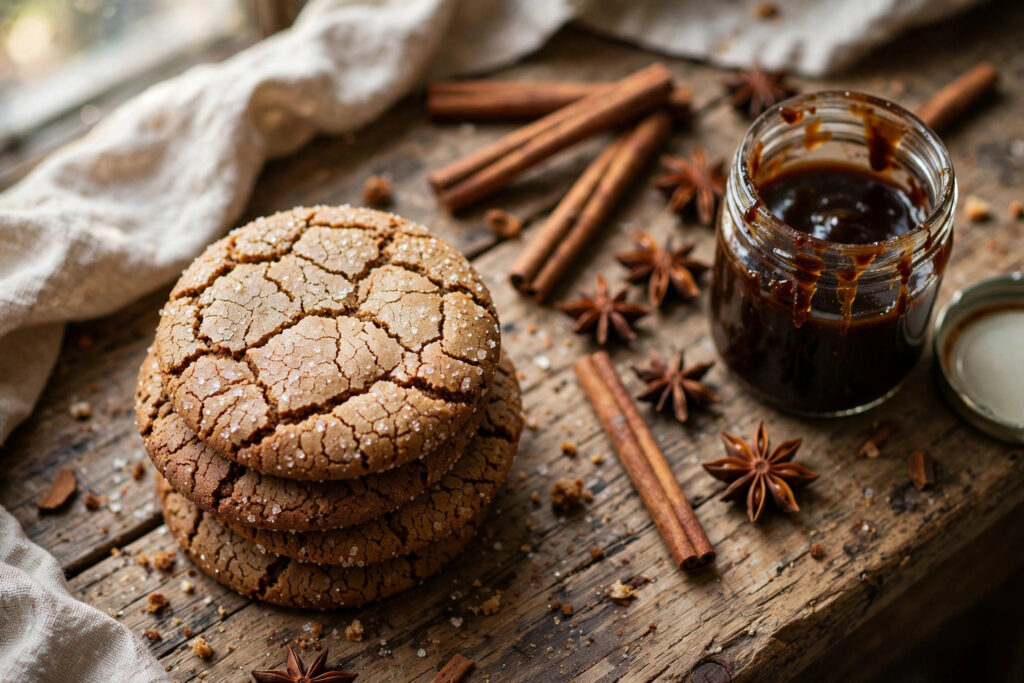
Chewy, Crackled, and Full of Molasses Spice
This soft gingerbread cookies recipe is for everyone who loves gingerbread flavor but finds traditional cutout gingerbread men dry and crunchy. These are thick, chewy cookies with deeply spiced molasses dough, rolled in sparkling sugar that crackles beautifully as they bake. Crisp, sugary edges give way to soft, tender centers that stay chewy for days.
I developed this recipe after years of being disappointed by gingerbread that tasted great but ate like a hockey puck. The secrets are a generous amount of molasses, melted butter for chewiness instead of creamed butter, and — most importantly — pulling the cookies from the oven when they still look slightly underdone. They finish setting on the hot pan, and the result is the soft gingerbread cookie of your dreams. No rolling pins, no cookie cutters, no decorating — just scoop, roll, and bake.
Why You’ll Love This Recipe
- Soft and chewy for days. Molasses and brown sugar keep these tender long after crunchier gingerbread goes stale.
- No rolling or cutters. Scoop-and-bake simplicity — no chilling, no floury countertops, no decorating required.
- Deep, real spice flavor. Fresh ginger, cinnamon, cloves, and dark molasses taste like actual gingerbread, not a candle.
- Beautiful crackled tops. The sugar coating splits as they bake into a bakery-worthy finish with zero effort.
- Freezer-friendly. Freeze the dough balls and bake fresh cookies any time a craving strikes.
Ingredients
- 3 1/4 cups all-purpose flour
- 1 teaspoon baking soda
- 1/2 teaspoon fine sea salt
- 2 teaspoons ground ginger
- 1 1/2 teaspoons ground cinnamon
- 1/2 teaspoon ground cloves
- 1/4 teaspoon ground nutmeg
- 3/4 cup (1 1/2 sticks) unsalted butter, melted and slightly cooled
- 1 cup packed dark brown sugar
- 1 large egg, at room temperature
- 1/2 cup unsulphured molasses (not blackstrap)
- 2 teaspoons pure vanilla extract
- 1/3 cup granulated sugar, for rolling
A few notes on key ingredients: Use regular unsulphured molasses (like Grandma’s brand), not blackstrap — blackstrap is bitter and will overpower the cookies. Dark brown sugar has more molasses than light brown and deepens both the flavor and the chew; light brown works but the cookies will be milder. Melted butter (rather than creamed) is what creates the dense, chewy texture — let it cool 5 minutes so it does not scramble the egg. Measure the molasses in a lightly oiled cup and it will slide right out.
How to Make This Soft Gingerbread Cookies Recipe
- Whisk the dry ingredients. In a medium bowl, whisk together the flour, baking soda, salt, ginger, cinnamon, cloves, and nutmeg until evenly combined. Whisking well now means no pockets of bitter baking soda later.
- Mix the wet ingredients. In a large bowl, whisk the melted (slightly cooled) butter and dark brown sugar together until smooth and glossy, about 1 minute. Whisk in the egg, molasses, and vanilla until fully combined. The mixture will be dark, thick, and smell incredible.
- Combine wet and dry. Add the dry ingredients to the wet mixture and stir with a sturdy spatula just until no flour streaks remain. The dough will be soft and slightly sticky — that is correct. Do not overmix or the cookies will be tough.
- Rest the dough briefly. Let the dough rest at room temperature for 15 to 20 minutes. This short rest lets the flour hydrate, which deepens the flavor and makes the dough easier to scoop. (For even deeper flavor, refrigerate up to 24 hours.)
- Preheat and prep. While the dough rests, preheat the oven to 350°F and line two baking sheets with parchment paper. Pour the granulated sugar for rolling into a shallow bowl.
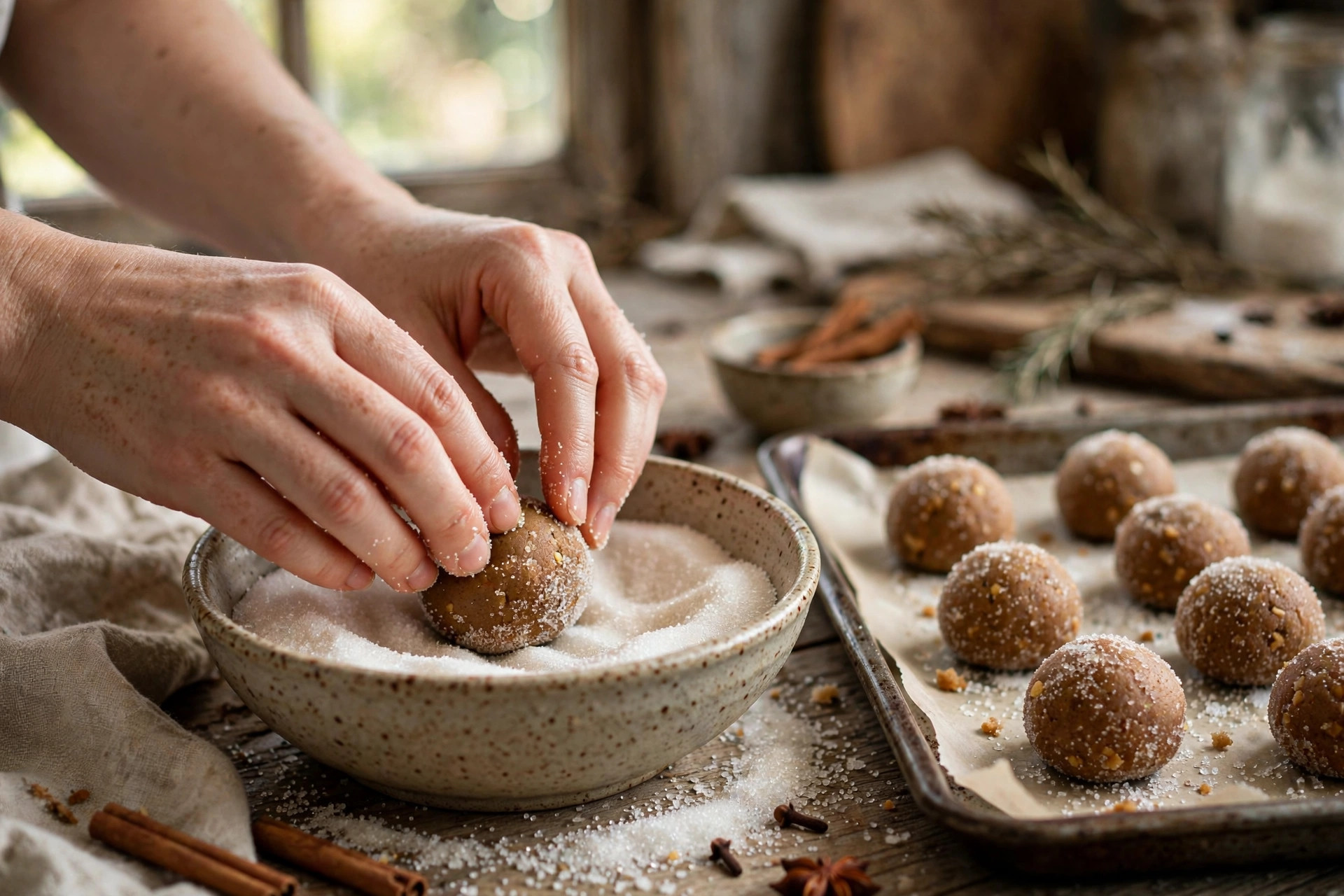
- Scoop and roll. Scoop 2-tablespoon portions of dough (a medium cookie scoop is ideal) and roll each into a smooth ball between your palms. Roll each ball generously in the granulated sugar until fully coated — this coating is what crackles.
- Space and bake. Place the sugared dough balls 2 inches apart on the prepared sheets. Bake at 350°F for 10 to 12 minutes, until the tops are crackled and set around the edges but the centers still look slightly soft and underdone. This is the critical moment — fully set-looking cookies will be crunchy, not soft.
- Cool on the pan. Let the cookies cool on the baking sheets for a full 10 minutes. They finish baking from residual heat during this rest, which is exactly how the centers stay soft while the structure sets. Then transfer to a wire rack to cool completely.
- Repeat with remaining dough. Let the baking sheets cool for a few minutes between batches — dough spread on a hot sheet bakes unevenly. You should get about 30 cookies total.
- Store properly. Once completely cool, store in an airtight container. Tuck a slice of plain sandwich bread into the container — the cookies absorb its moisture and stay soft even longer. Replace the bread every couple of days.
Pro Tips for the Best Results
- Underbake deliberately. I cannot stress this enough: pull them when the centers look soft. They set as they cool, and this single habit is the difference between chewy and crunchy gingerbread.
- Use fresh spices. Ground spices lose potency after about a year. If your ginger has been in the cabinet since last Christmas, buy fresh — the whole cookie depends on bold spice flavor.
- Do not flatten the dough balls. They spread on their own into thick, bakery-style rounds. Flattening them makes thin, crisp cookies instead of soft, thick ones.
- Cool the baking sheets between batches. Running cool water over the back of the sheet (then drying it) quickly resets the temperature for even baking across all batches.
- The bread-slice trick really works. A slice of plain white bread in the storage container keeps cookies soft for up to a week. The bread goes stale; the cookies stay perfect.
- Freeze dough balls for fresh-baked anytime. Roll the balls in sugar, freeze solid on a tray, then bag them. Bake from frozen at 350°F, adding 1 to 2 minutes — no thawing needed.
- Skip tasting the raw dough. Raw flour and eggs can carry harmful bacteria, so resist nibbling no matter how good it smells — the baked cookies are worth the short wait. See USDA food safety guidance for details.
Variations
- Chocolate-dipped gingerbread. Once cool, dip half of each cookie in melted dark chocolate and let set on parchment. The bitter chocolate against the sweet spice is outstanding.
- Gingerbread sandwich cookies. Pair similar-size cookies with cream cheese frosting or vanilla buttercream between them for an indulgent holiday treat.
- Extra-spicy. Add 1/2 teaspoon of freshly grated ginger or a pinch of cayenne alongside the ground spices for a warming kick that builds slowly.
- Orange-gingerbread. Add 1 tablespoon of finely grated orange zest to the wet ingredients. Citrus brightens the deep molasses flavor beautifully.
Storage & Reheating
Store cooled cookies in an airtight container at room temperature for up to 1 week — with the bread-slice trick, they stay soft the entire time. For longer storage, freeze baked cookies in a single layer until firm, then transfer to a freezer bag with parchment between layers for up to 3 months; thaw at room temperature for 30 minutes. Frozen unbaked dough balls keep for 3 months and bake directly from frozen. No reheating needed, though 8 seconds in the microwave makes a day-old cookie taste freshly baked.
Frequently Asked Questions
Why did my soft gingerbread cookies recipe turn out hard?
Overbaking is the cause nearly every time. These cookies must come out of the oven when the centers still look underdone — they finish setting on the hot pan. Also check your oven temperature with a thermometer; ovens that run hot turn chewy cookies crunchy fast. Finally, measure flour by spooning and leveling, since packed flour makes dense, hard cookies.
Can I make these into cutout gingerbread men?
This dough is too soft for cutouts — it is designed for drop cookies. For roll-and-cut gingerbread, you need a firmer dough with less molasses and a chilling step. These scoop-and-bake cookies deliver the same beloved flavor with a fraction of the effort.
What is the difference between light and dark molasses?
Regular (light) unsulphured molasses is sweet with mild bitterness — perfect for cookies. Dark molasses is more intense. Blackstrap molasses is very bitter, low in sugar, and will make your cookies taste harsh. For this recipe, standard unsulphured molasses (sometimes labeled “original” or “robust”) is exactly right.
Can I make the dough ahead of time?
Yes — the dough actually improves with a rest. Refrigerate the mixed dough (tightly covered) for up to 3 days; the spices meld and deepen. Let it sit at room temperature 15 minutes before scooping so it is workable, then roll, sugar-coat, and bake as directed.
Why roll the cookies in sugar?
The sugar coating does three things: it creates the signature crackled top as the cookie spreads and the coating splits, it adds a delightful crisp-sweet crust that contrasts the chewy center, and it gives the cookies a beautiful sparkling finish. Coarse or turbinado sugar works too for extra crunch.
Recipe Snapshot
- Prep Time: 20 mins (+ 20-min rest)
- Cook Time: 12 mins per batch
- Total Time: 1 hr
- Servings: 30 cookies
- Calories: ~145 per cookie
- Course: Dessert
- Cuisine: American
This soft gingerbread cookies recipe delivers everything you want from holiday baking — deep spice, chewy centers, crackled tops — with none of the rolling-pin hassle. Make a batch this weekend and keep the dough balls in your freezer all season. Building your Christmas cookie tray? Add our Italian ricotta Christmas cookies for something pillowy and our pumpkin oatmeal cream pies for a showstopper. For more holiday inspiration, see our easy meal prep recipes for stress-free entertaining.