
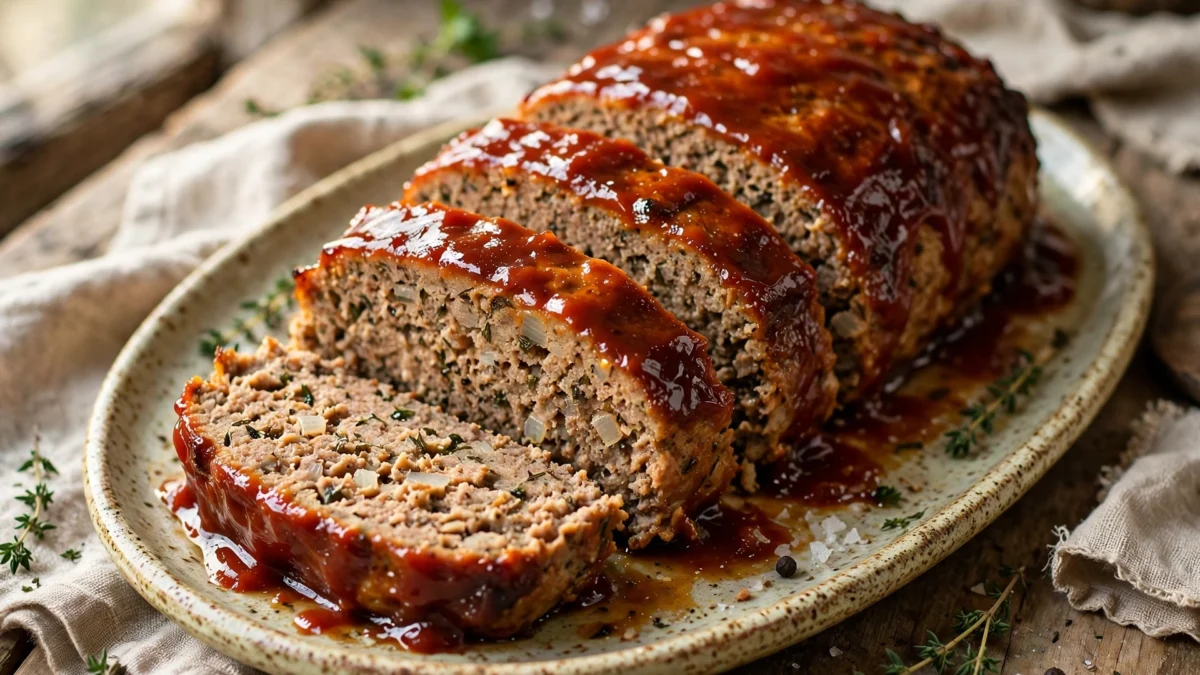
Some dinners earn their place on the table by being fancy, and some earn it by being exactly what a tired household needs at the end of a long day. Homestyle meatloaf with glaze belongs firmly in the second group. It is the kind of meal that smells like home before it even comes out of the oven: warm onion, savory beef, and a sweet tangy glaze that caramelizes on top while the loaf bakes. You mix everything in one bowl, shape it by hand, and let the oven do the rest. There is no pastry to roll, no sauce to babysit, and no special equipment involved.
What makes this version worth keeping is how little can go wrong. The ingredient list is short and made of things most kitchens already have. Ground beef, an egg, breadcrumbs, milk, one small onion, and a few pantry sauces and seasonings are all it takes. The glaze is just three ingredients stirred together in a small bowl, and it does a surprising amount of work: it keeps the top of the loaf moist, adds a sweet and savory contrast to the beef, and gives the finished slices that glossy, appetizing look. The total time is 1 hour 10 minutes, and most of that is hands-off baking time, so you can set the table, steam some vegetables, or simply sit down for a few minutes while dinner finishes.
Quick answer: Homestyle meatloaf with glaze is a 1 hour 10 minute dinner made by gently mixing 1 1/2 lb ground beef with an egg, breadcrumbs, milk, finely diced onion and Worcestershire sauce, shaping the mixture into a loaf on a lined sheet pan, spreading a ketchup, brown sugar and mustard glaze over the top, and baking at 375°F until the ground beef reaches 160°F. Let it rest 10 minutes before slicing.
Why This Meatloaf Works
The secret to a good meatloaf is restraint. Ground beef turns tough when it is overworked, so the mixing step is deliberately gentle. You combine the ingredients only until they come together, and then you stop. The breadcrumbs and milk are doing quiet work here: the milk soaks into the breadcrumbs and creates a soft, moist binder that keeps the loaf tender instead of dense. Without that step, a meatloaf made from lean beef can dry out in the oven. With it, the slices hold together and stay juicy.
The onion matters more than it looks like it should. One small onion, finely diced, distributes flavor through the whole loaf and releases moisture as it bakes. Dicing it fine is important because larger pieces stay crunchy and create weak spots where a slice can fall apart. Worcestershire sauce adds a deep, savory note that plain salt cannot match, and it works with the beef rather than covering it up.
Shaping the loaf on a lined sheet pan instead of packing it into a loaf pan is another small choice with a real payoff. A free-form loaf has more surface area, so more of it browns, and the glaze has somewhere to cling. A loaf pan traps steam and fat around the meat, which can leave the sides pale and soggy. On a sheet pan, the edges get a little crisp, the glaze sets, and the finished loaf looks like something worth putting in the middle of the table.
Homestyle Meatloaf with Glaze Ingredients
- 1 1/2 lb ground beef
- 1 egg
- 3/4 cup breadcrumbs
- 1/2 cup milk
- 1 small onion, finely diced
- 1 tbsp Worcestershire sauce
- 1/3 cup ketchup
- 1 tbsp brown sugar
- 1 tsp mustard
Use ground beef you would be happy to eat as a burger, and let it sit on the counter for a few minutes so it is not ice cold when you mix it. Cold beef straight from the fridge is harder to shape and takes longer to cook through. Crack the egg into the bowl first and beat it lightly with a fork before adding the rest, which helps it distribute evenly. Measure the breadcrumbs and milk as listed, since that ratio is what keeps the loaf moist without making it soggy. The ketchup, brown sugar and mustard are for the glaze, so keep them separate until you mix the topping.
How to Make Homestyle Meatloaf with Glaze
- Heat oven to 375°F.
- Mix beef, egg, breadcrumbs, milk, onion and Worcestershire gently.
- Shape into a loaf on a lined sheet pan.
- Mix ketchup, brown sugar and mustard, spread over loaf and bake until ground beef reaches 160°F.
Start by heating the oven to 375°F and lining a sheet pan with parchment paper or foil. The lining matters because the glaze drips a little as it bakes, and a lined pan saves you a scrubbing job later. While the oven heats, put the beef in a large bowl and add the egg, breadcrumbs, milk, finely diced onion and Worcestershire sauce. Mix with your hands or a fork, folding the ingredients together until they are just combined. The moment you cannot see dry breadcrumbs anymore, stop. Overmixing is the single most common reason a meatloaf turns out tough, and it happens in about thirty seconds of extra stirring.
Turn the mixture out onto the lined sheet pan and shape it into a loaf with your hands. Aim for an even, slightly rounded shape, roughly the same thickness from end to end, so it cooks at the same pace all the way through. A loaf that is fat in the middle and thin at the ends will dry out at the ends before the center is done. Press the top gently so it is smooth, and tuck the sides in so the shape holds.
Now make the glaze. Stir the ketchup, brown sugar and mustard together in a small bowl until the sugar dissolves into the ketchup. Spoon it over the top of the loaf and spread it evenly with the back of the spoon, letting a little run down the sides. The glaze goes on before the loaf goes into the oven, so it bakes on and turns glossy and slightly caramelized while the meat cooks.
Bake at 375°F until the ground beef reaches 160°F in the center. A food thermometer is the reliable way to check, because color alone can mislead you with ground meat. USDA guidance says ground beef should reach 160°F, and that number is the target here. Once the loaf is done, take it out of the oven and let it rest 10 minutes before slicing. That rest is not optional. The juices need time to settle back into the meat, and a loaf cut too soon will fall apart on the board and lose moisture onto the pan.
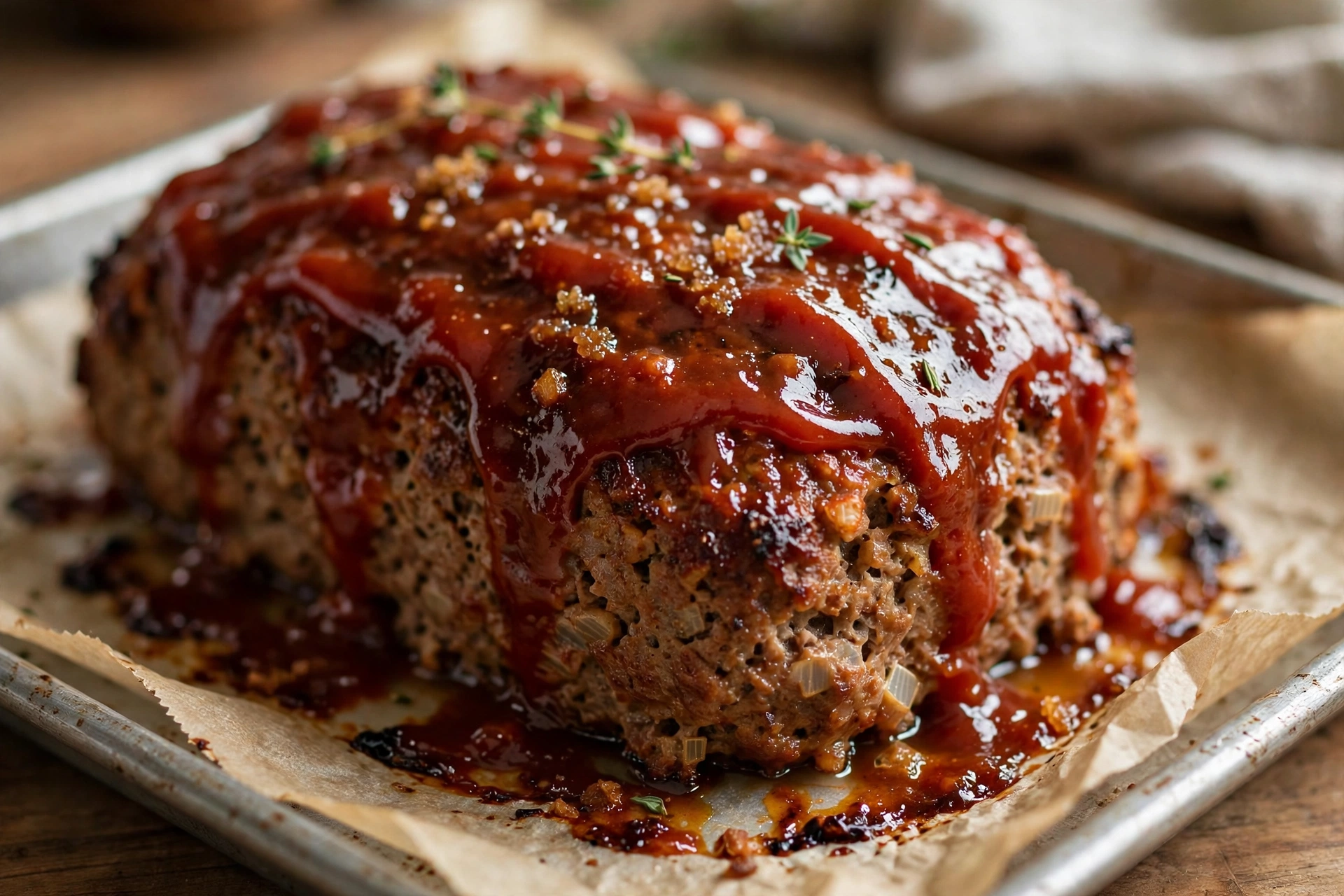
The Glaze: Three Ingredients, One Big Difference
The glaze is the part people remember. Ketchup brings sweetness and acidity, brown sugar deepens the sweetness and helps the top caramelize, and mustard adds a sharp note that keeps the whole thing from tasting flat. Mixed together, they form a coating that stays on the loaf instead of sliding off, and it thickens as it bakes. If you like a thicker glaze layer, you can spread a second spoonful over the top partway through baking, once the first layer has started to set. The original recipe uses the amounts listed, and they cover a loaf this size well.
Taste the glaze before you spread it on. Ketchup brands vary in sweetness, and a spoonful of mustard can taste stronger in one brand than another. The mixture should taste sweet first, tangy second, with a gentle sharpness at the end. If your ketchup is very sweet, the mustard balances it. If you want a little more bite, a pinch of black pepper stirred into the glaze works without changing anything else.
Tips for a Moist Meatloaf That Slices Cleanly
Let the beef come toward room temperature for ten to fifteen minutes before you mix it. Cold meat mixes unevenly, and uneven mixing is how you end up with a dense patch in the middle of the loaf. Wash your hands well, then mix with your hands, because your fingers can feel when the mixture comes together far better than a spoon can. The second the ingredients look evenly distributed, stop.
Do not press the loaf too hard when you shape it. A tightly packed loaf bakes up dense and heavy, while a loosely shaped one stays tender. Think of it as guiding the meat into a loaf shape rather than squeezing it into one. Keep the thickness even, and use a light touch to smooth the top and sides.
The ten-minute rest after baking is the easiest tip to follow and the easiest to skip, so put the knife down and set a timer. Slicing a hot meatloaf straight from the oven lets the juices run out onto the board, and the slices crumble. After ten minutes, the loaf holds its shape, the juices stay in the meat, and a sharp serrated knife will cut clean slices without dragging the glaze off the top.
If the top of the loaf starts to darken faster than the center cooks, tent a piece of foil loosely over the top for the remaining bake time. The foil slows the browning without trapping so much steam that the glaze turns soggy. Check the temperature with a thermometer rather than guessing by time, because oven strength and loaf thickness both change how long the bake takes.
Substitutions That Still Taste Like Meatloaf
Use a mixture of beef and turkey if preferred. A half-and-half mix keeps the flavor familiar while lightening the loaf a little, and the same glaze and seasonings work with the blend. Turkey on its own can dry out more easily, so the beef and turkey combination is the safer swap. Keep the rest of the recipe exactly the same, including the 160°F target temperature.
If you are out of breadcrumbs, crushed crackers or rolled oats can stand in, using the same 3/4 cup measure. The texture changes slightly with each one, but the binder still does its job. Plain breadcrumbs keep the flavor neutral, while seasoned breadcrumbs add a little extra garlic and herb flavor. Either one works, so use what you have.
The milk can be any milk you keep in the fridge. Whole milk gives the richest result, but lower-fat milk works fine in this recipe because the breadcrumbs absorb it either way. If you need to skip the onion, a teaspoon of onion powder stirred into the mix gives a similar background flavor, though the loaf loses the small pockets of moisture that fresh onion adds.
What to Serve with Homestyle Meatloaf
Meatloaf pairs naturally with the classic sides that show up on American dinner tables. Mashed potatoes are the obvious partner, because they soak up the glaze and the juices from the slices. Green beans, steamed carrots, or a simple salad add color and a fresh contrast to the rich loaf. A slice of bread is useful for the last bit of glaze on the plate, and it turns a regular weeknight dinner into something that feels complete.
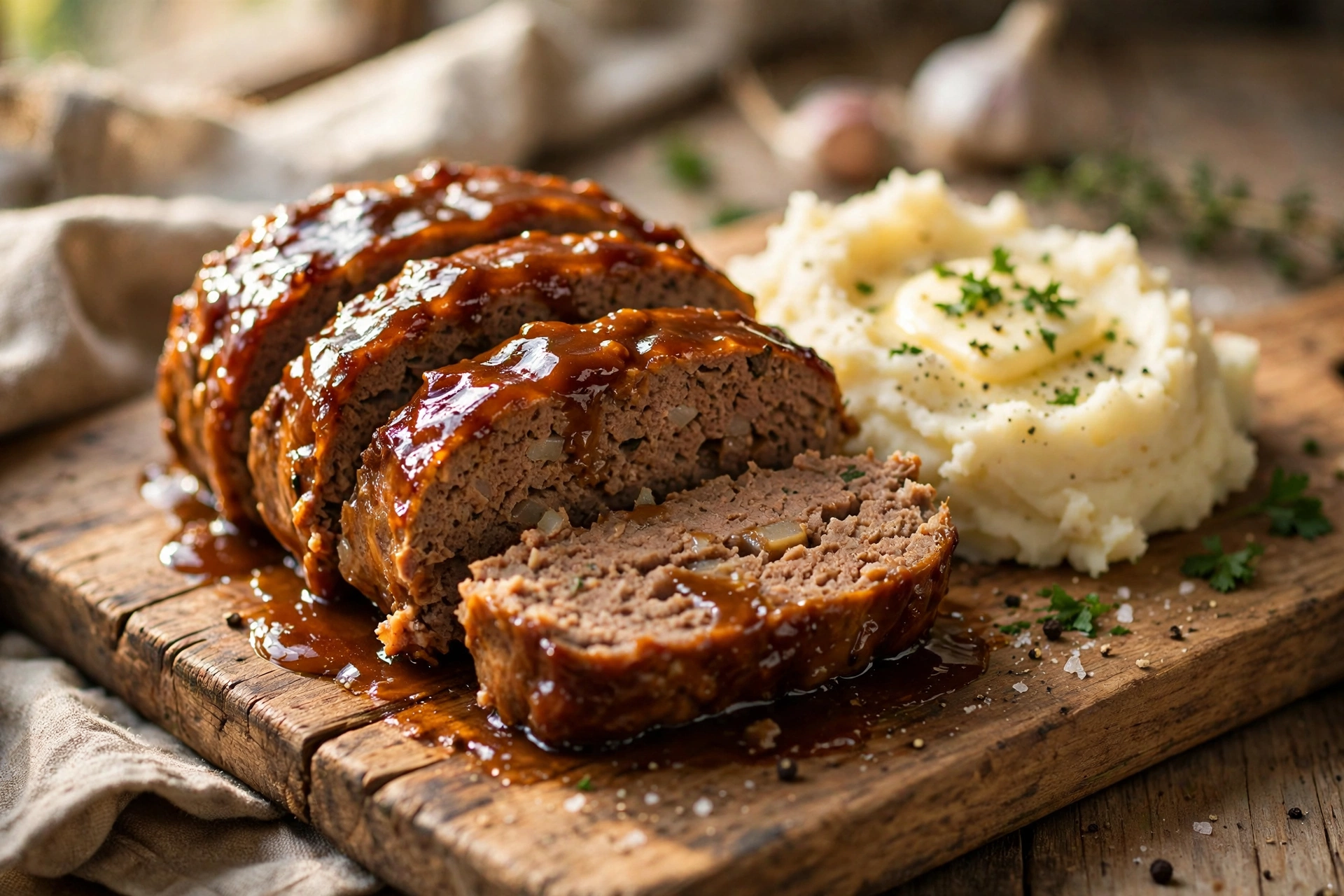
For a lighter plate, serve the meatloaf with roasted vegetables or a crisp slaw. The sweetness of the glaze works well against something sharp or tangy, so a vinegar-based slaw or a salad with a lemon dressing balances the meal without adding another heavy dish. If you are feeding a crowd, a second sheet pan of roasted potatoes can go into the oven at the same time, since the oven is already at 375°F.
Leftover meatloaf is one of the better second-day dinners. Let leftovers cool promptly, refrigerate them in covered containers, and reheat only the portion you plan to eat. USDA guidance generally recommends using refrigerated cooked leftovers within three to four days, so freeze portions you will not use in that window. Cold slices also make a solid sandwich the next day, with a little extra ketchup or mustard and a slice of bread. If the texture changes after refrigeration, a spoonful of water or broth while reheating often helps restore moisture.
Frequently Asked Questions
How do I know when meatloaf is done?
Use a food thermometer in the center of the loaf. Ground beef should reach 160°F. Color is not a reliable guide with ground meat, so the thermometer reading is what counts.
Why did my meatloaf fall apart when I sliced it?
The most common reason is slicing too soon. Let the meatloaf rest 10 minutes before slicing so the juices settle and the loaf firms up. Mixing too gently can also leave dry breadcrumbs unbound, so make sure the ingredients are evenly combined before shaping.
Can I use a loaf pan instead of a sheet pan?
You can, but a free-form loaf on a lined sheet pan browns better and gives the glaze more surface to cling to. A loaf pan traps fat and steam around the meat, which can leave the sides pale and soft.
Can I mix beef and turkey in this meatloaf?
Yes. Use a mixture of beef and turkey if preferred, keeping the same amounts and the same 160°F target temperature. The glaze and seasonings work the same with the blend.
How long should meatloaf rest before slicing?
Let it rest 10 minutes before slicing. Cutting earlier lets the juices run out and the slices crumble.
More Comfort Food from Home Recipe Daily
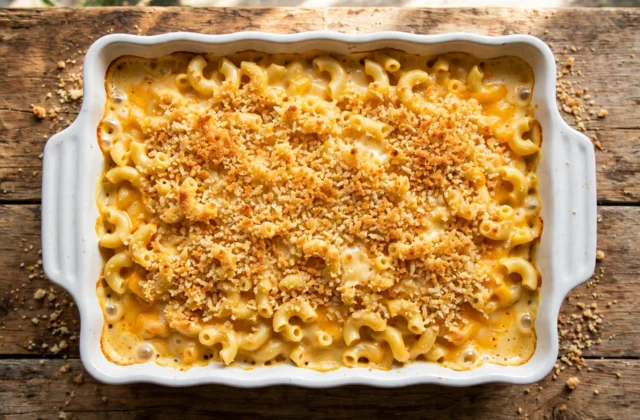
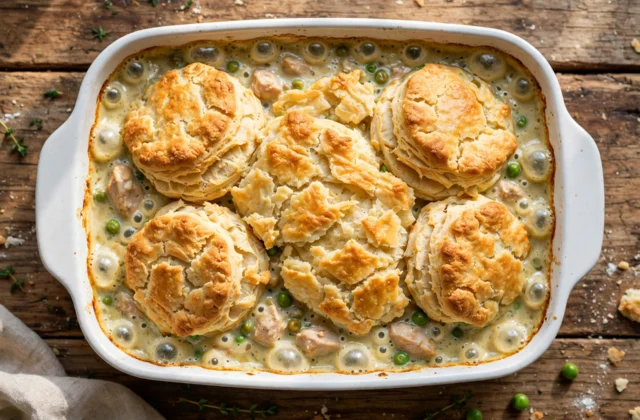
This meatloaf sits alongside the other cozy dinners in our comfort food collection. If you liked the hands-off baking here, try our Easy Chicken Pot Pie with Biscuit Topping, which bakes a creamy chicken filling under golden biscuits in 50 minutes. For another baked classic, our Creamy Baked Mac and Cheese takes 45 minutes and uses a butter and flour roux to keep the cheese sauce smooth. On a soup night, our Classic Chicken and Vegetable Soup simmers in 45 minutes and uses the same read-the-recipe-first approach. All three come from our hub of Best Comfort Food Recipes to Make at Home, where you will find this meatloaf alongside the pot pie, mac and cheese and a creamy potato corn chowder.
Ingredients
Method
- Heat oven to 375°F.
- Mix beef, egg, breadcrumbs, milk, onion and Worcestershire gently.
- Shape into a loaf on a lined sheet pan.
- Mix ketchup, brown sugar and mustard, spread over loaf and bake until ground beef reaches 160°F.