
Vegetable and Cheese Frittata: A 30-Minute Meal for Any Time of Day
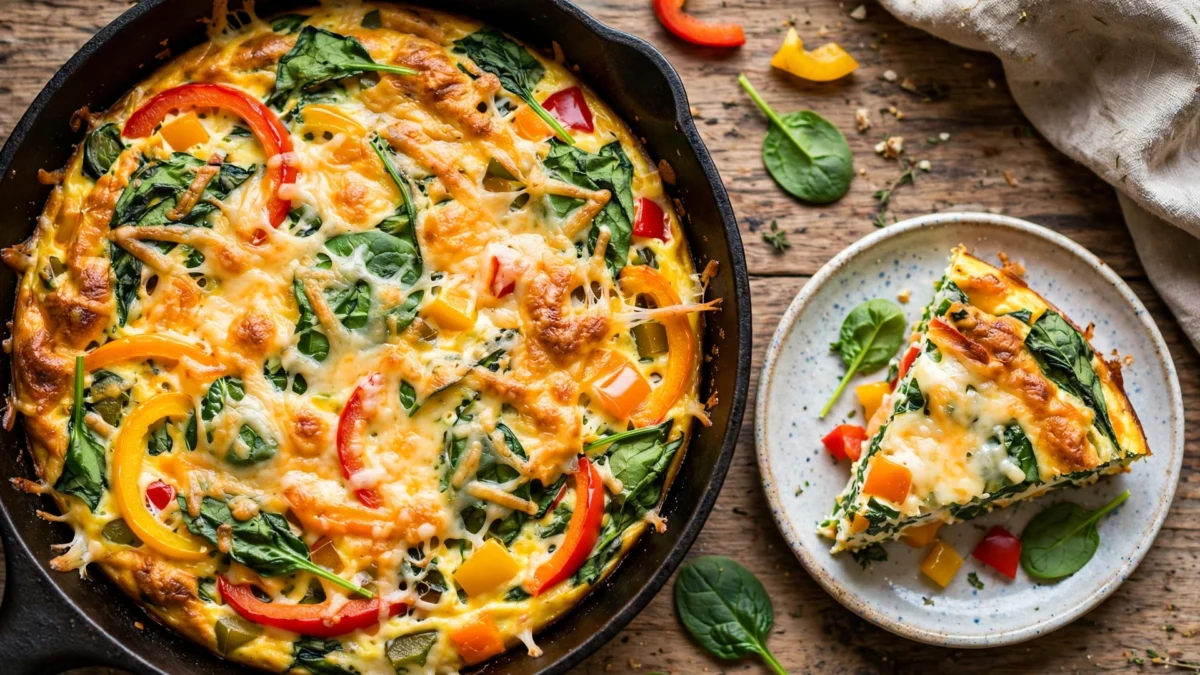
There are nights when the fridge holds a few vegetables, some eggs and a bag of shredded cheese, and that is enough. A vegetable and cheese frittata turns those ordinary bits into a proper meal in 30 minutes, with one pan and almost no washing up. It works for breakfast, lunch or dinner, which is why it earns a regular place in a home cooking routine.
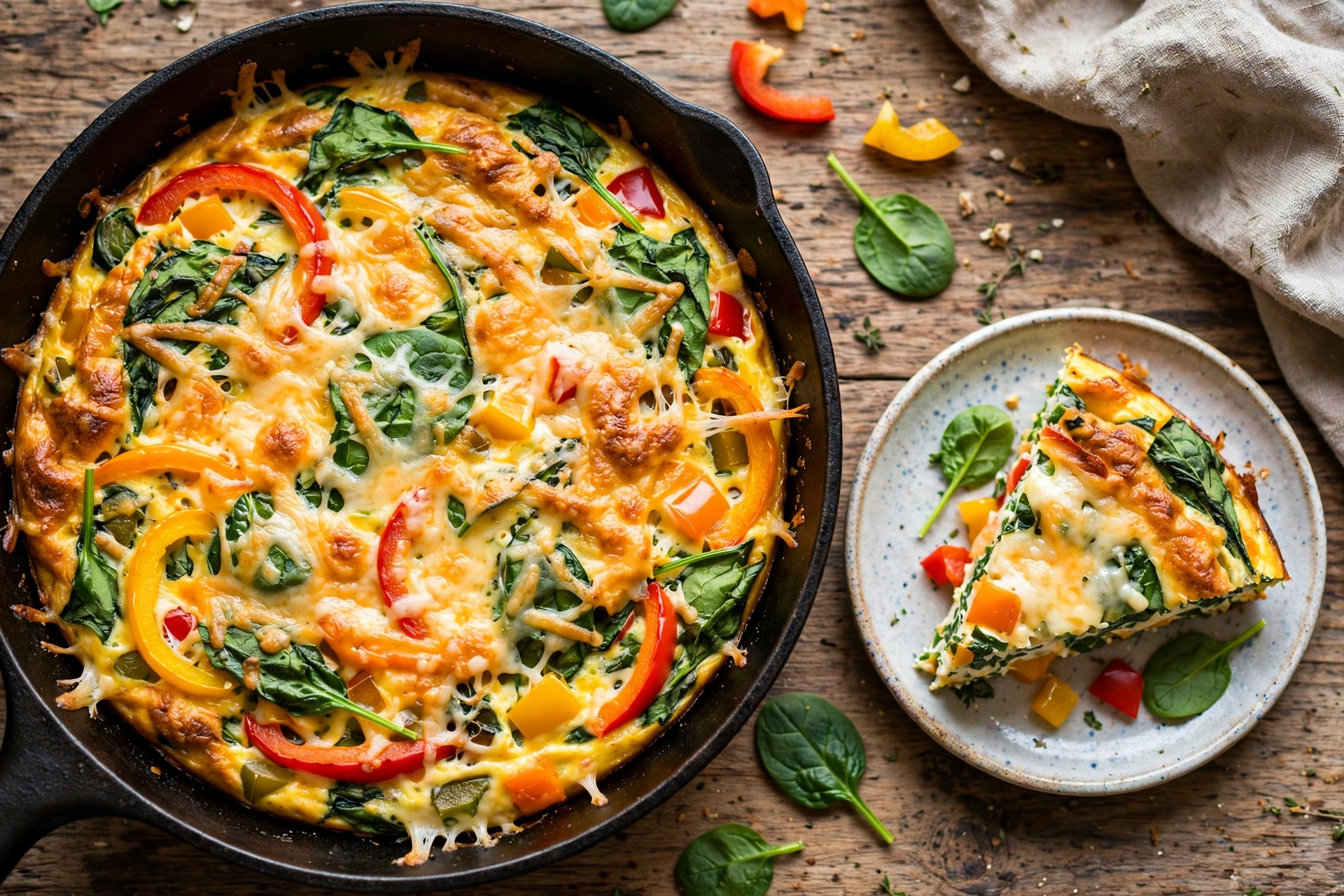
This is the kind of recipe that rewards a relaxed cook. You do not need exact vegetables or a perfect technique. You need a hot oven-safe skillet, eggs whisked with a little milk, and vegetables cooked just long enough to lose their raw edge. The cheese melts through the eggs as the frittata finishes in the oven, and the centre sets into soft slices that hold their shape on the plate.
Quick answer: A vegetable and cheese frittata takes 30 minutes from start to finish. Whisk 8 eggs with milk and seasoning, saute vegetables in an oven-safe skillet, pour the eggs over the top, add cheese, cook 2 minutes on the stove, then bake at 375°F until the centre is just set. It works with almost any cooked or quick-cooking vegetables you already have.
Why This Frittata Works
A frittata sits between an omelette and a crustless quiche, and that middle ground is exactly what makes it so useful. You cook it mostly in the oven, so the heat reaches the eggs evenly from all sides instead of scorching the bottom while the top stays wet. The two minutes on the stove first give the base a head start, so the finished frittata has a light golden underside and a soft, just-set centre.
The ingredient list is short on purpose. Eight eggs give the frittata enough body to slice cleanly, while a third of a cup of milk keeps the texture tender rather than rubbery. Three quarters of a cup of shredded cheese is enough to flavour every bite without turning the dish greasy. A tablespoon of olive oil is all the fat the pan needs, and salt, pepper and herbs do the rest of the seasoning work.
Flexibility is the real strength here. The recipe calls for two cups of chopped cooked or quick-cooking vegetables, which covers almost anything in the crisper drawer. Spinach wilts in a minute. Peppers, courgette and mushrooms soften quickly. Leftover roasted vegetables go straight in without any extra cooking at all. That means the frittata changes with the season and with whatever needs using up, and it still comes out right.
Ingredients
- 8 eggs
- 1/3 cup milk
- 2 cups chopped cooked or quick-cooking vegetables
- 3/4 cup shredded cheese
- 1 tbsp olive oil
- salt, pepper and herbs
How to Make Vegetable and Cheese Frittata
- Heat oven to 375°F.
- Saute raw vegetables in an oven-safe skillet until tender.
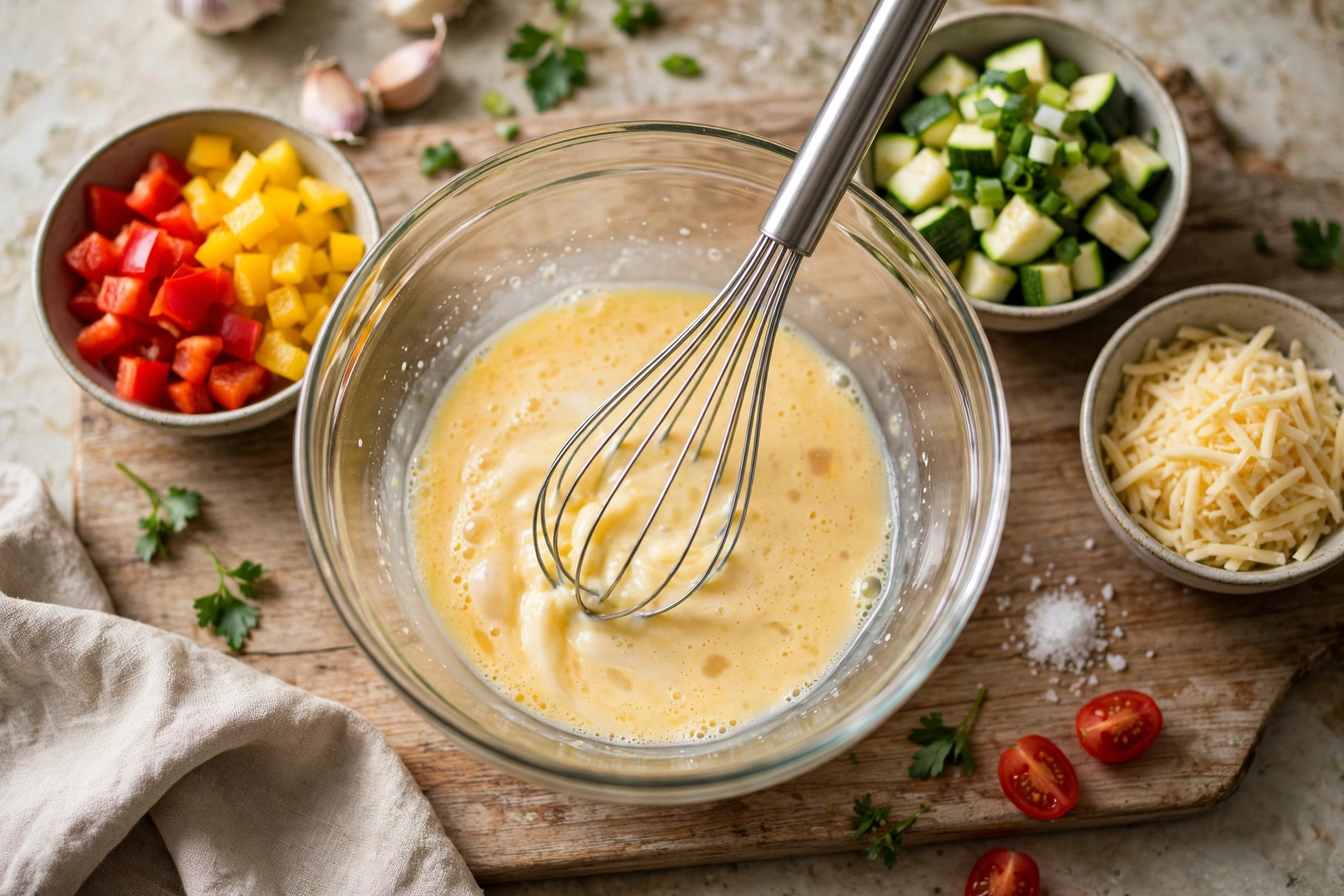
- Whisk eggs, milk and seasoning, pour over vegetables and add cheese.
- Cook 2 minutes on stove, then bake until center is just set.
Choosing Your Vegetables
The two cups of vegetables in this recipe can be almost anything, but a little thought about texture pays off. Quick-cooking vegetables such as spinach, sliced mushrooms, diced peppers, courgette and spring onions soften in the skillet in a few minutes and need no extra work. Harder vegetables such as carrots, broccoli or sweet potato need to be chopped small or cooked first, or they will still be firm when the eggs are done.
Leftover vegetables are the easiest option of all. Roasted peppers, cooked broccoli, sauteed mushrooms or a spoonful of last night’s roasted potatoes can go straight into the pan. Just warm them through in the olive oil before you add the eggs. Ham and cooked potatoes are both good additions when you want something more filling, and they follow the same rule: they go in with the vegetables, before the egg mixture.
Keep the total at about two cups. Much more than that and the eggs cannot bind the filling, so slices fall apart on the plate. Much less and the frittata eats like a plain omelette. Two cups gives you vegetables in every bite and still leaves enough egg to hold it together.
Tips for a Frittata That Sets Properly
Whisk the eggs and milk well before they hit the pan. You want the yolks and whites fully combined, with a little air worked in, because that is what gives the finished frittata its light texture. Season the egg mixture itself rather than seasoning the vegetables alone, so the flavour runs through the whole dish.
Use a skillet that can go from stove to oven. Cast iron is the classic choice, and a heavy stainless steel pan works too. A non-stick pan with a plastic handle will not survive the oven, so check the handle before you start. The pan should be wide enough that the egg mixture sits in a fairly thin layer, which helps it set evenly.
Watch the centre, not the clock, for doneness. The frittata is ready when the edges look set and the middle still has a slight wobble when you give the pan a gentle shake. It firms up as it rests for a few minutes out of the oven, so pulling it out at that point keeps it soft instead of dry. A knife slipped into the centre should come out clean, with no wet egg clinging to it.
Let the frittata rest for about five minutes before slicing. Cutting it straight from the oven lets steam escape too fast and the slices can crumble. A short rest lets the cheese settle and the eggs finish setting, so each wedge holds its shape.
Variations Worth Trying
Cheese choice changes the character of the dish more than anything else. Cheddar gives a sharp, familiar flavour. Mozzarella melts into soft strands. Feta crumbles through the eggs and adds a salty tang, and a little goat cheese does the same with a creamier finish. Use whatever shredded cheese you have; the amount stays the same at three quarters of a cup.
Fresh herbs lift the whole dish. Chopped parsley, chives or basil stirred into the eggs add colour and a fresh note. Dried herbs work too, and they go in with the salt and pepper when you whisk the eggs. A pinch of smoked paprika or a little garlic powder in the egg mixture gives a warmer flavour without adding any extra steps.
For a heartier version, add diced ham or cooked sausage with the vegetables, or fold in cooked potatoes. Both make the frittata filling enough for a main course without changing the method at all. If you add potatoes, keep them in small pieces so they heat through quickly and do not weigh the eggs down.
What to Serve With It
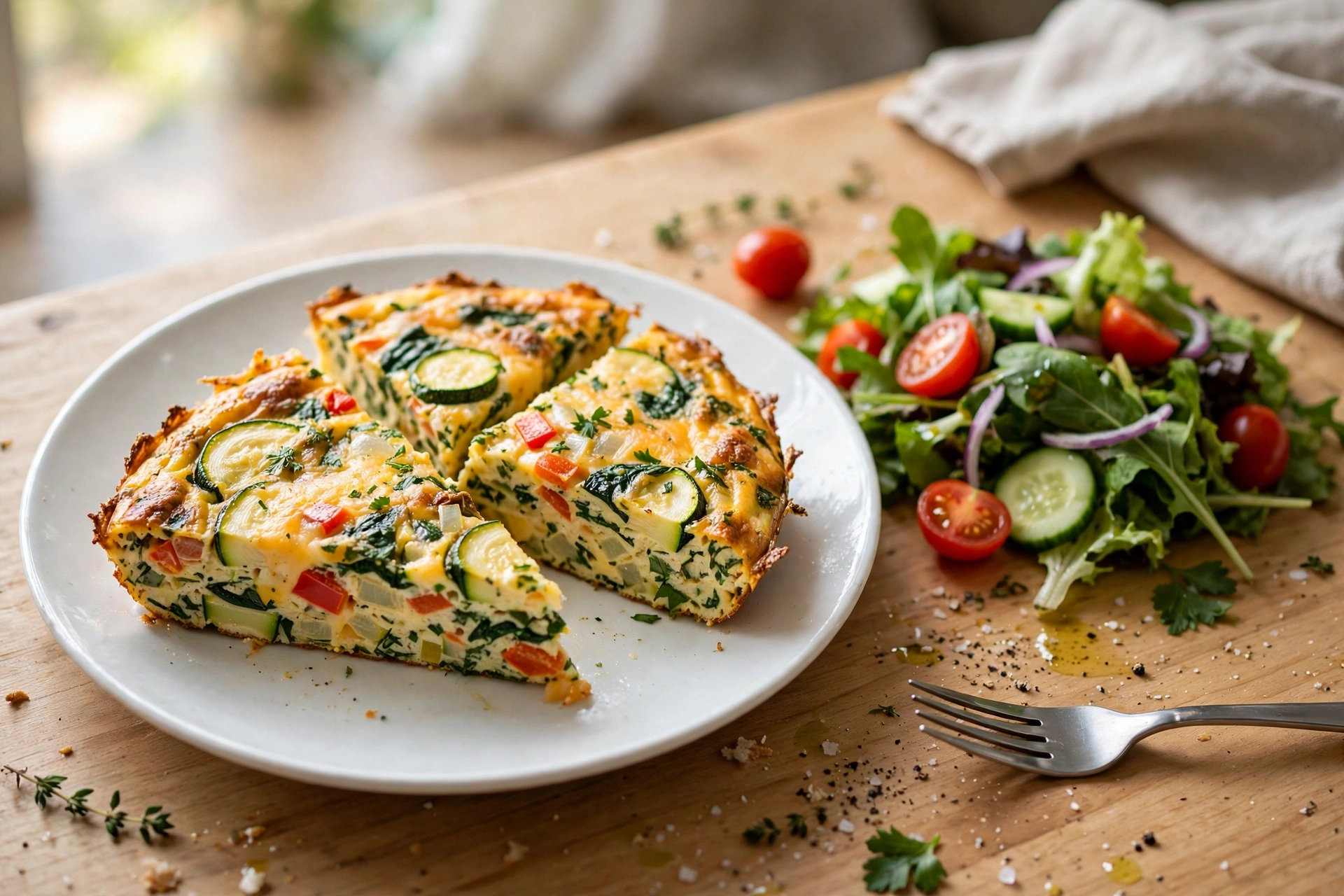
A frittata is a complete meal on its own, but a simple side makes it feel finished. A green salad with a light dressing is the easiest match, and it adds the fresh crunch the soft eggs do not have. Crusty bread works well too, especially if you want to stretch the meal for a larger table. Fresh fruit on the side suits a breakfast serving, and steamed vegetables or a simple tomato salad fit a dinner plate.
Because it works hot, warm or at room temperature, a frittata also packs well for lunch. Slices wrapped and chilled hold their shape, and they taste good cold or gently reheated. That makes it a useful way to cook once and eat twice, which is a habit that saves both time and money across a busy week.
Storing Leftovers
Let leftovers cool promptly, then refrigerate them in a covered container. Reheat only the portion you plan to eat, either in a low oven or in short bursts in the microwave, so the eggs stay tender. If a slice looks a little dry after refrigeration, a spoonful of water or broth on the plate while it reheats helps restore moisture. Eat refrigerated leftovers within three to four days, and freeze any portions you will not reach in that window.
Frequently Asked Questions
Can I make a frittata ahead of time?
Yes. Cook it fully, let it cool, then cover and refrigerate it. It keeps well for a few days and tastes good cold or reheated gently. Slices also freeze well if you wrap them tightly.
What vegetables work best in a frittata?
Quick-cooking vegetables are the easiest: spinach, peppers, mushrooms, courgette and spring onions. Leftover roasted vegetables work well too. Harder vegetables such as carrots or broccoli need to be chopped small or cooked first so they soften in time.
How do I know when the frittata is done?
The edges should look set and the centre should have only a slight wobble when you shake the pan gently. It firms up as it rests. A knife in the centre should come out clean.
Can I use a different cheese?
Yes, any shredded cheese works. Cheddar, mozzarella, feta and goat cheese all give a different flavour, so use your favourite. Keep the amount at three quarters of a cup.
Is a frittata good for dinner?
Yes. A frittata works for breakfast, lunch or dinner. With a salad or some bread on the side, it makes a complete evening meal in 30 minutes, and leftovers pack well for lunch the next day.
More Recipes to Try
If you like egg-based dinners, try our Egg and Vegetable Breakfast-for-Dinner Skillet, another quick pan meal that works any time of day. For a warming main course, our Classic Chicken and Vegetable Soup uses the same kind of everyday vegetables in a completely different dish. Cheesy Broccoli Baked Potatoes make a filling side or a light main alongside a slice of frittata. This recipe comes from our collection of Simple Homemade Recipes for Everyday Cooking, where you will find three more dependable meals built on the same simple approach.
Ingredients
Method
- Heat oven to 375°F.
- Saute raw vegetables in an oven-safe skillet until tender.
- Whisk eggs, milk and seasoning, pour over vegetables and add cheese.
- Cook 2 minutes on stove, then bake until center is just set.